
What Chatham Grad Students Saw in Costa Rica
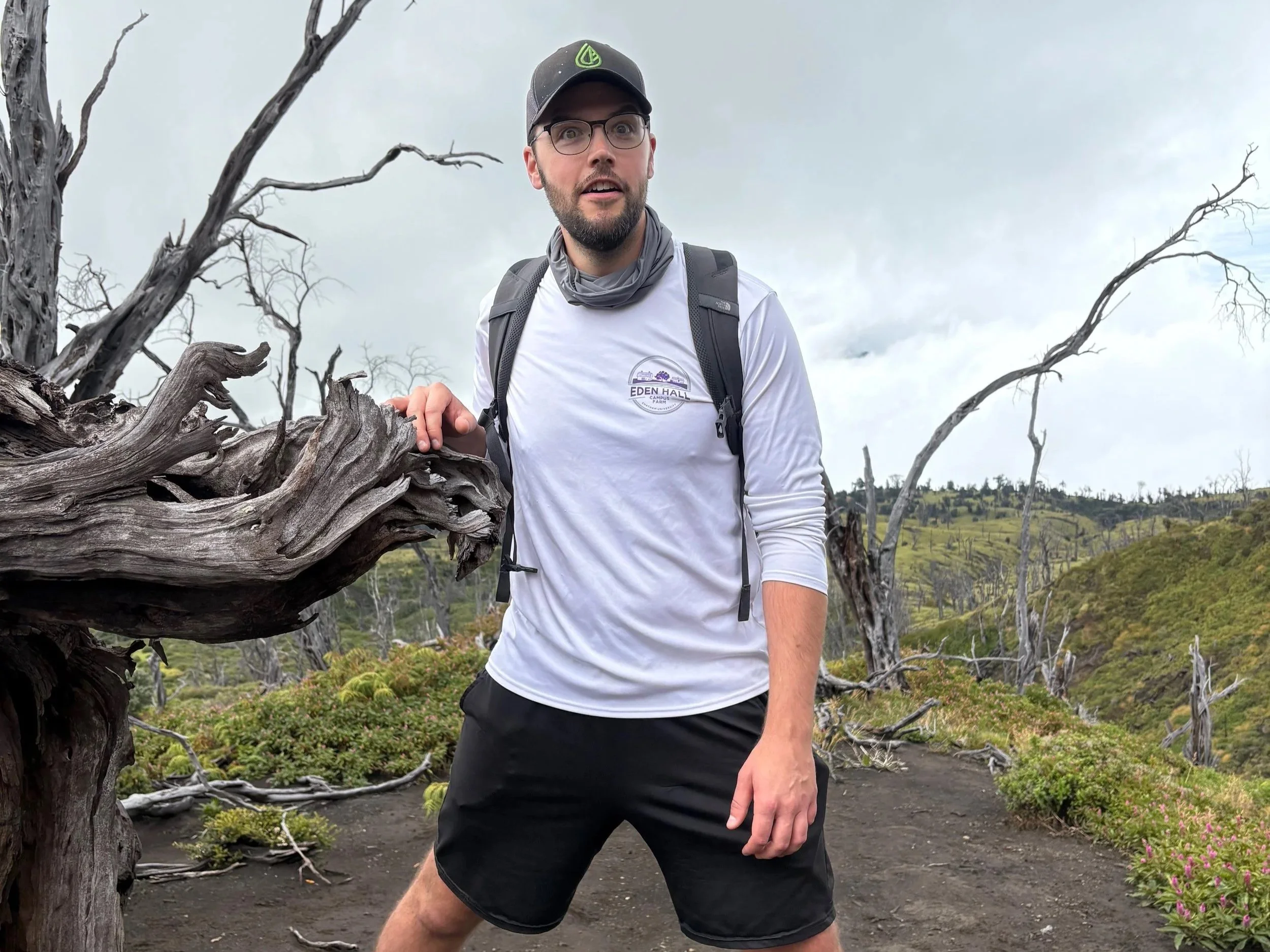
Martin “Marty” Farchione, MSUS ’26, poses for a photo among the charred remains of trees killed by the Turrialba Volcano.
Food studies and sustainability students in Chatham University’s global agriculture course spent 10 days in Costa Rica last month walking through coffee fields, hiking an active volcano, and exploring local markets during a class trip.
The trip to CATIE—the Tropical Agricultural Research and Higher Education Center—in Turrialba was a chance for students to break out of their normal routines and learn about food systems in a totally new environment.
That was one of the main reasons Martin “Marty” Farchione, MSUS ’26, joined the class.
“I'd never even really traveled outside of the country,” said Farchione, who grew up in upstate New York. He said his only international travel had been over the Canadian border.
“I’d been wanting to travel outside of the country, and particularly to go to some tropical places to see ecosystems and a natural environment that was way outside of what I grew up in and what I'm used to,” he said.
Staying at CATIE, Farchione said, was also a highlight of the trip, with its botanical garden full of flora. “I'm a big fan of trees. They had this ceiba tree growing in there that dwarfed me,” he said. “This is not an oak or a big maple from around here. It's four stories tall.”
Students who major in Chatham’s Masters of Sustainable Tourism program, which begins in fall 2026, will also have a chance to go to CATIE as part of their curriculum.
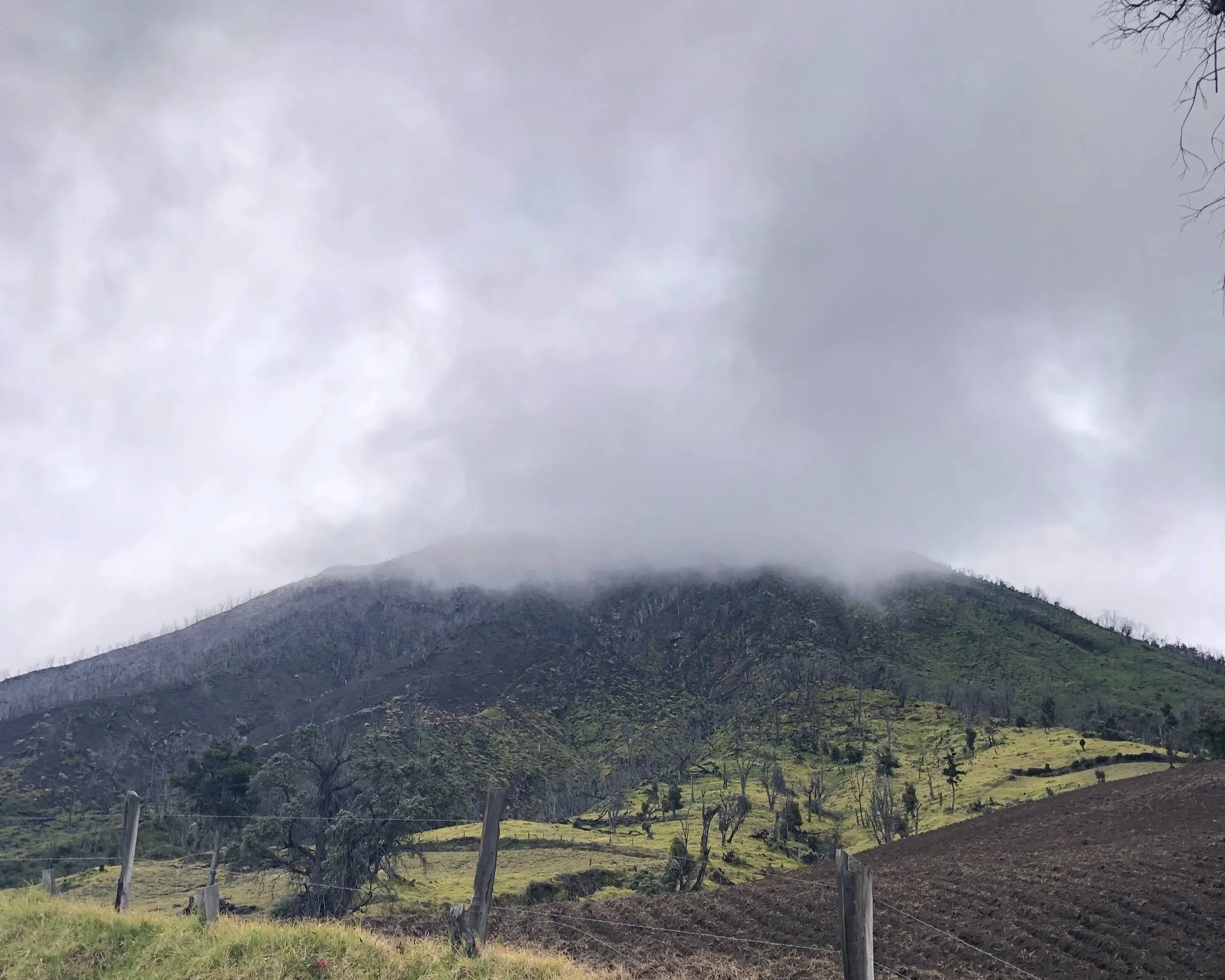
The peak of the Turriabla Volcano is enshrouded in mist as it looms over a field. (Courtesy of Marty Farchione)
Outside the university’s campus, Farchione said he saw plenty of natural splendor, whether taking tours through coffee fields or hiking the Turrialba Volcano. “Those types of things in nature give you pause,’ he said. “[They] make you think a little harder, give you a little perspective.”
Clare Erwin ’25, MAFS ’26, said touring local farms and orchards was a highlight of her trip too. “It was especially significant to see the crop systems and diverse collections I’d read about—coffee in particular—with my own eyes, and to meet the people doing the invaluable work of studying and preserving the future of these crops.
“I learned more about coffee and cacao than I ever could have in a classroom setting, and I appreciated the immersive, hands-on experiences of milling coffee on a small, organic finca or cracking open large cacao pods to taste their sweet, fruity seeds,” Erwin added.
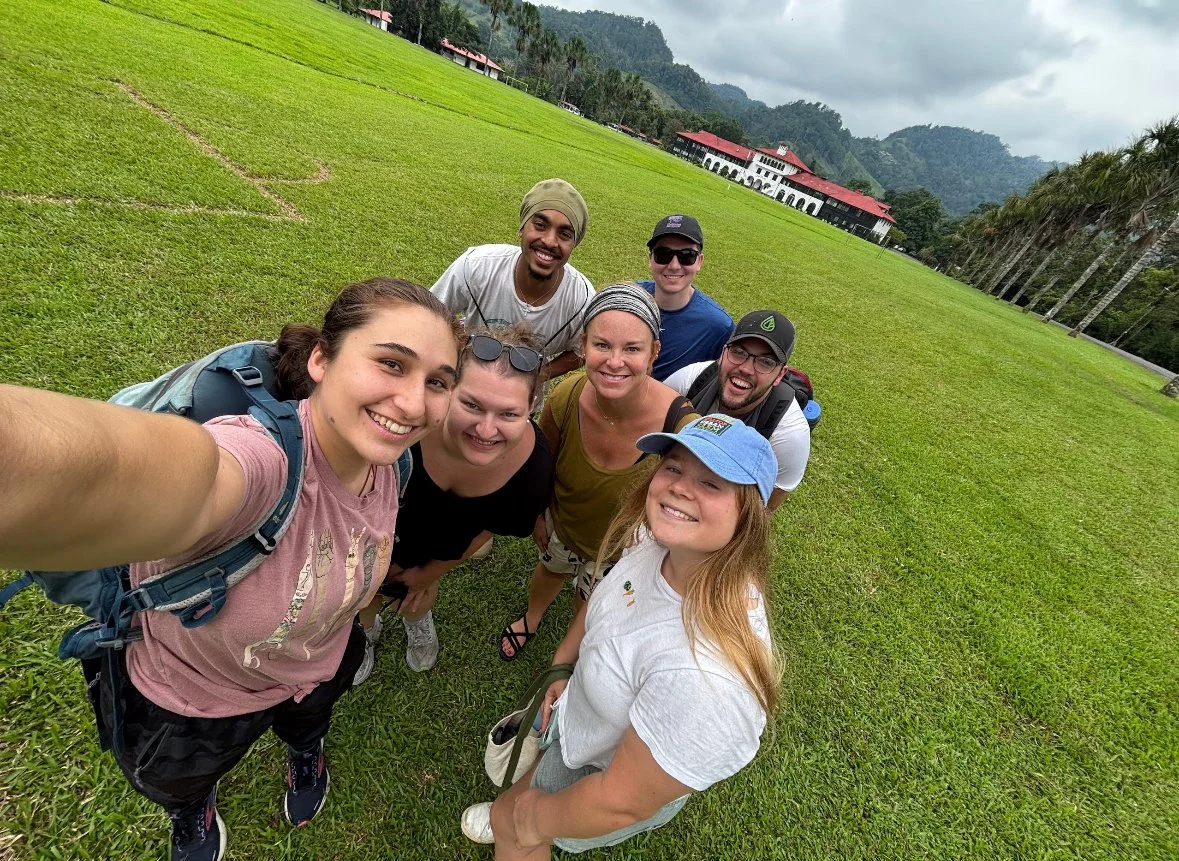
Clare Erwin (front right) poses with fellow Chatham students at the CATIE campus. (Courtesy of Clare Erwin)
Erwin said the meaningful connections she’s made since she started at Chatham as an undergraduate student have added context to her studies, as well as providing students like her with opportunities to learn and grow in the world.
“The assumptions I’d unknowingly brought with me were constantly challenged, from the chilly mountain weather to the ways in which smallholder farmers articulated their values and frameworks for sustainability, and I returned to Pittsburgh with new perspectives, knowledge, and memories,” Erwin said.
“I truly believe that the uniqueness of Chatham’s food studies program is in large part because of the thoughtful, experiential aspects built into every class, whether traveling to another country or stepping outside to bake in our campus bread oven.”