
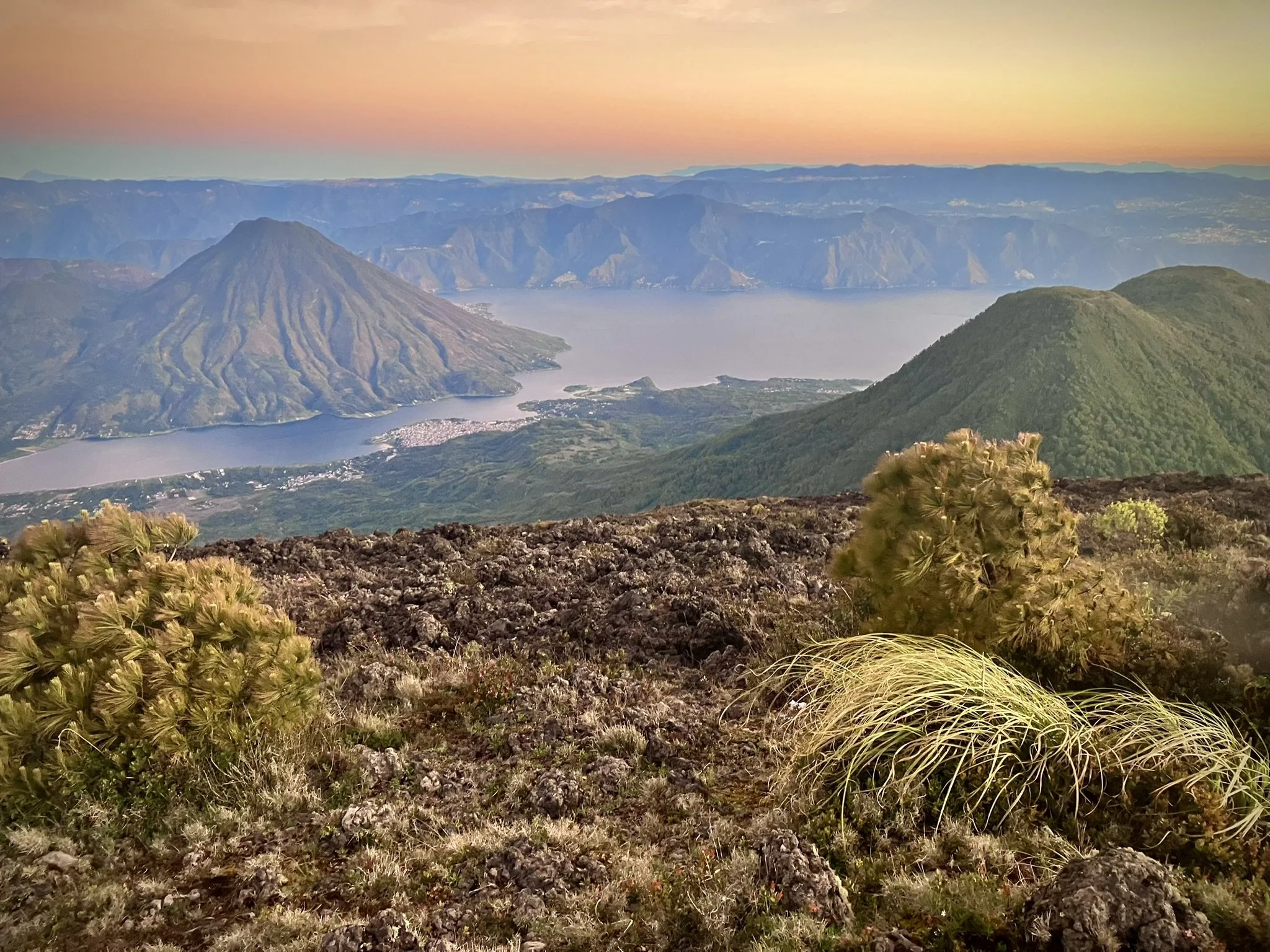
Lake Atitlán sits amid the Sierra Madre mountain range in Guatemala. (Courtesy of Ryan Utz)
High in the Sierra Madre mountain range, approximately 5,100 feet above sea level, Lake Atitlán sits nestled between three dormant volcanoes. The lake is widely considered one of the most scenic in the world, with vast, clear-blue waters that reach a depth of over 1,100 feet. Located in Guatemala, it is the deepest lake in Central America.
Recently, the waters of Lake Atitlán have been getting cloudier. The lake is in an endorheic basin, meaning it does not drain to the Pacific Ocean. On top of this, the lake is fed by many polluted streams. This has caused excess nutrients to build up in the lake, contributing to more frequent algae blooms.
In January 2026, after months of daily one-hour virtual Spanish lessons, Ryan Utz boarded a plane to Guatemala with suitcases full of sensors and protective housing to do research funded by the Fulbright program. For six months, Utz studied a stream near Lake Atitlán.
Utz is an associate professor of water resources at Chatham University. He has been involved in a lot of research at Chatham’s Eden Hall, which the Chatham Recorder highlighted in 2025.
While there is existing research on various aspects of Lake Atitlán, there is a lack of scholarship into the streams that feed the lake, Utz said. The purpose of his trip was to fill this gap in the knowledge about the lake.
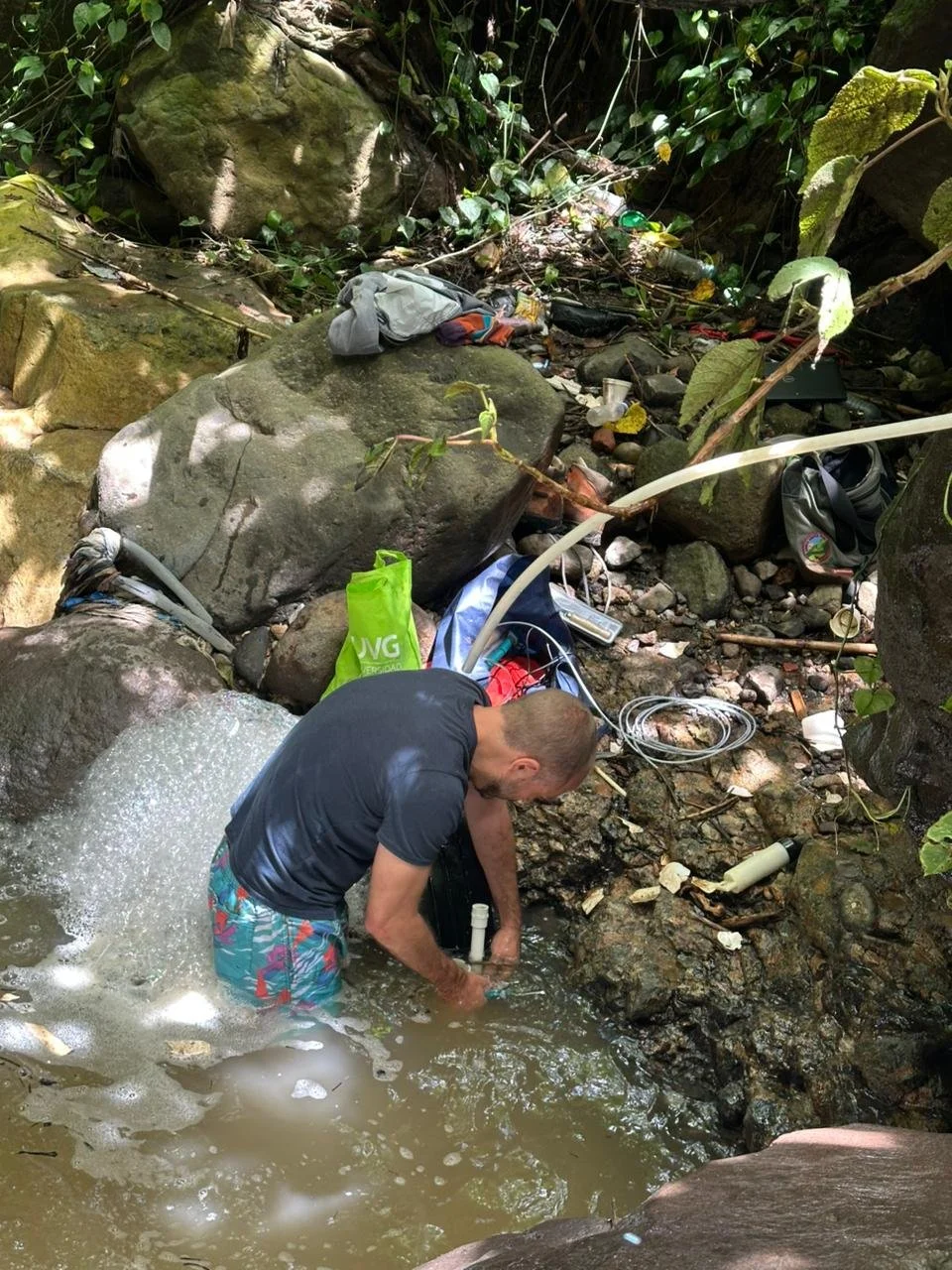
Utz works in a stream leading into Lake Atitlán. (Courtesy of Ryan Utz)
Due to the little research available, Utz’s goal was to create a baseline for the ecology of the stream. This included microbe sampling, water quality monitoring, and a study of what organisms live in the stream—specifically macroinvertebrates, such as crawfish and snails.
The stream isn’t without its own problems. “They don’t have a lot of infrastructure that we take for granted, like sewage treatment,” Utz explained. “There's a lot of sewage that goes untreated that goes right into the lake.”
When sewage is dumped into freshwater systems, the excess nutrients become ecologically damaging to the water quality and ecosystems in the area. It is not an uncommon problem; Pittsburgh still has combined sewage overflow into its three rivers, but the location of Lake Atitlán makes this phenomenon exceptionally damaging.
Lake Atitlán was designated a national park back in 1955, but an algae bloom in 2015 has shown how pollution in the area has progressed over time. The surrounding villages are primarily occupied by Indigenous Maya peoples.
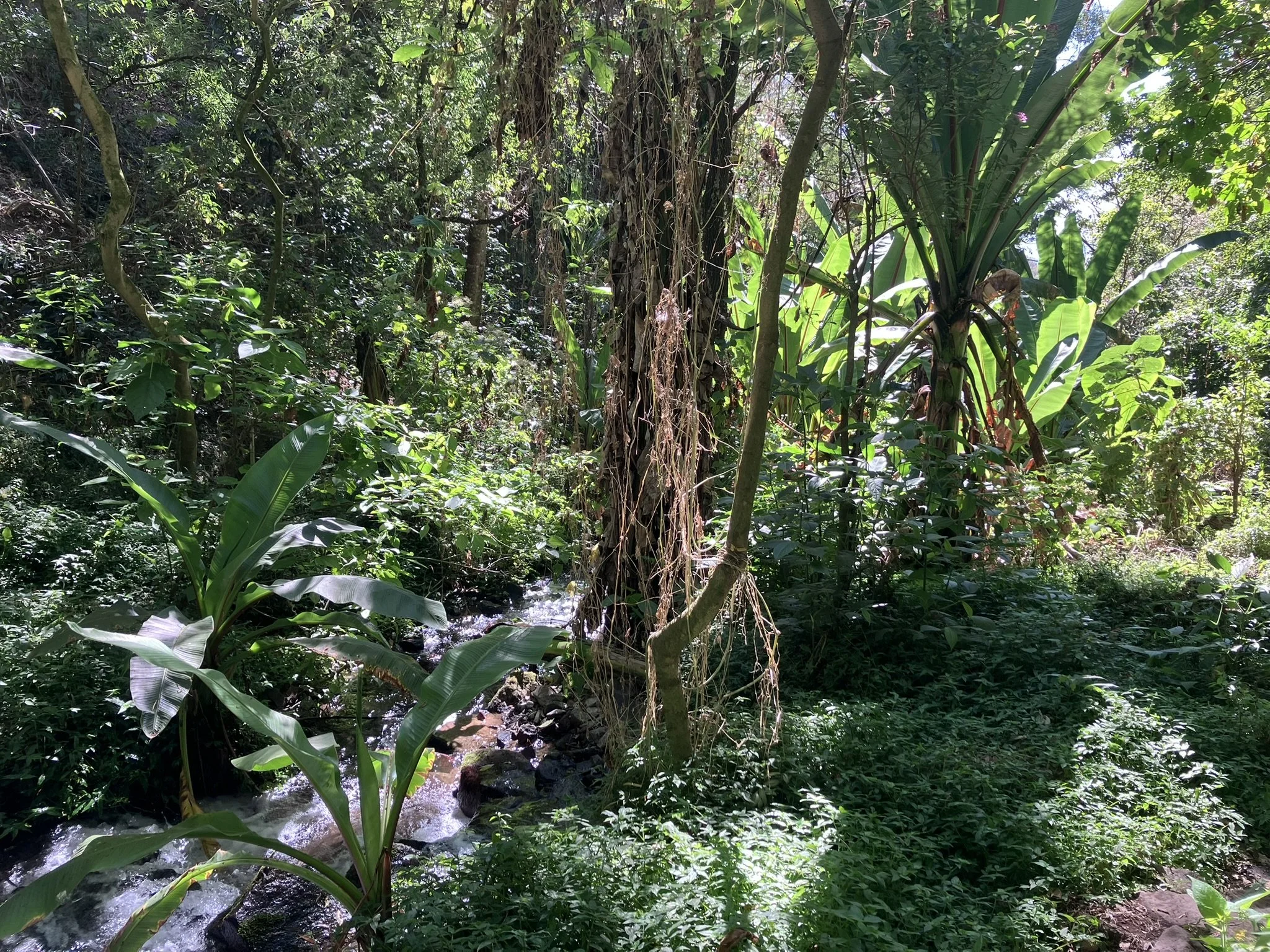
A stream connected to Lake Atitlán flows amid thick vegetation. (Courtesy of Ryan Utz)
Every month, researchers at a nearby university collect mountains of data about Lake Atitlán. Very rarely does any further analysis happen, Utz said.
“It really hit home to me how scientific research is way more part of our culture and our institutions here than it is there,” Utz told me.
During his six months in Guatemala, Utz collected enough data for two separate research papers to be written. “My hope is that [this research] becomes something that brings scientific attention to the region and helps them protect the lake.”
Now back in the United States and teaching again at Chatham, Utz will continue to work on authoring and publishing the two papers he mentioned. His research will provide an important baseline for the region’s ecology, serving as a starting point for much-needed further research.
Author Aster Davapanah ’27 is a digital content creator in Chatham’s Office of Marketing and Communications and a student of environmental science.