
A Q&A With Chatham President Lisa Lambert
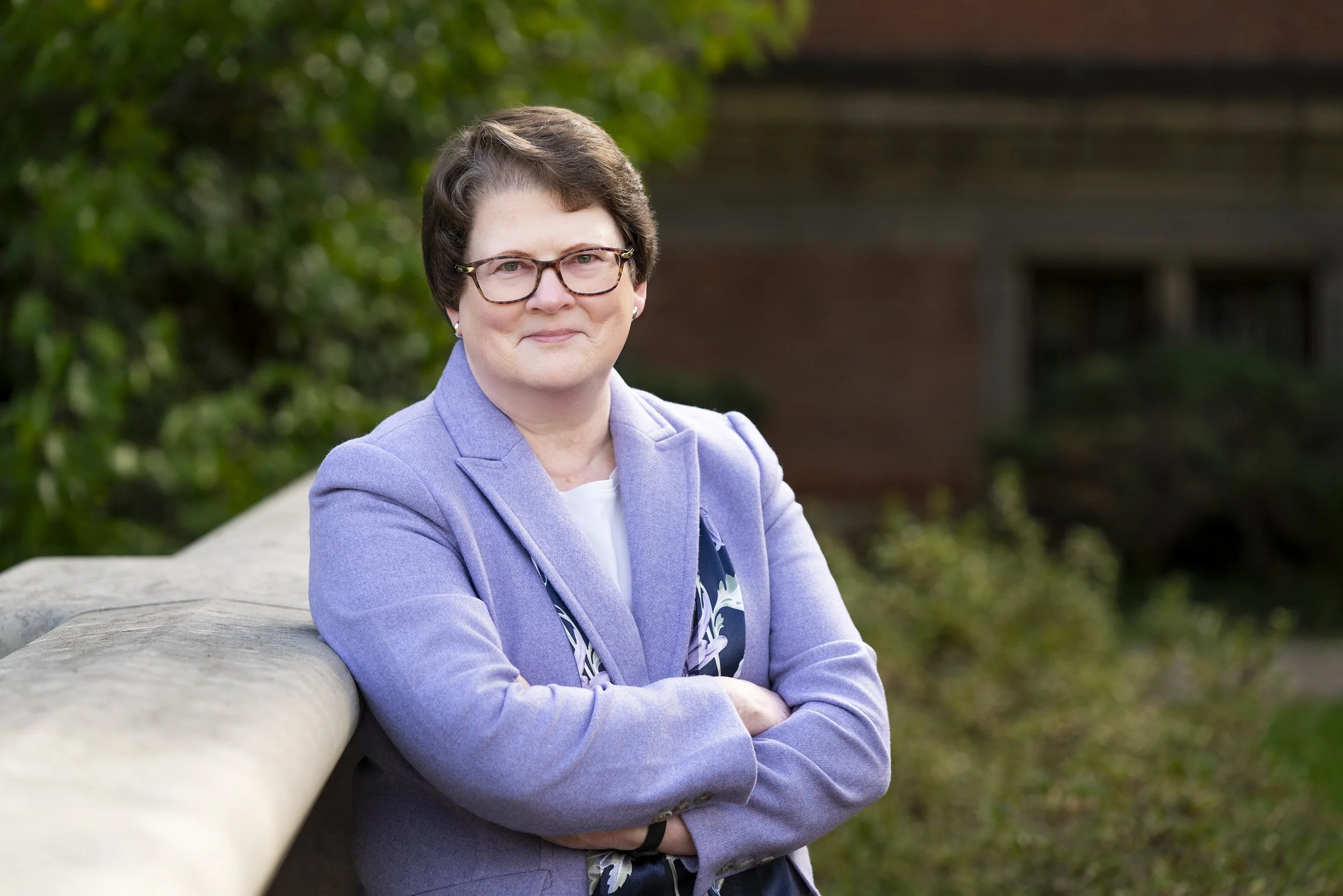
Lisa Lambert poses for a portrait on Chatham’s Shadyside Campus. (Nancy Andrews)
Lisa Lambert was named the 21st president of Chatham in October 2025. Around that time, she did an interview with the Chatham Recorder talking about her history at Chatham, her approach as the University’s president, and what she wants to see from Chatham in the future.
This interview is now reprinted in Pulse for the first time. See the full Recorder magazine and other stories at pulse.chatham.edu/recorder.
Chatham Recorder: You’ve worked here for over 40 years now, so I wanted to start by asking about what it was like when you first came to Chatham.
Lisa Lambert: The very first day I started work, I went to the cafeteria with my then-boss. A faculty member came up to me and looked at me and said, “Well, you're new here.” I said, “Yes, this is my first day!” in that bright, sort of cheerful voice you use. And he said, “Well, I hope you're not expecting to get tenure here.” What am I wearing wrong? What did I say wrong? What happened here? And I said, “Oh,” not really knowing what else to say. And he said, “Yeah, we're going to fold in about four years, so you won't have a job here.”
That was my first introduction to the inevitable cycle that every small college and university faces over time: You go for a while, and you're good, and then something changes and you have to react to it. And that was that first bump in the road that I encountered. And we had a different president at the time, that was Dr. Rebecca Stafford. She declared, Well, Chatham is going to close unless we change. The board brought in, eventually, Esther Barrazonne, who brought in graduate programs. And we got over our first hump.
Chatham was very much the same, but very different. And that sounds kind of confusing, kind of an oxymoron, but it was always focused on faculty and student interactions, staff and student interactions. The students felt connected to the school, and the school felt connected to the students. That has always been what Chatham is, who Chatham is. It's in our DNA. And it's why places like Chatham exist.
I'm wondering what it was you saw during your first days working here that made you think that this was a special place.
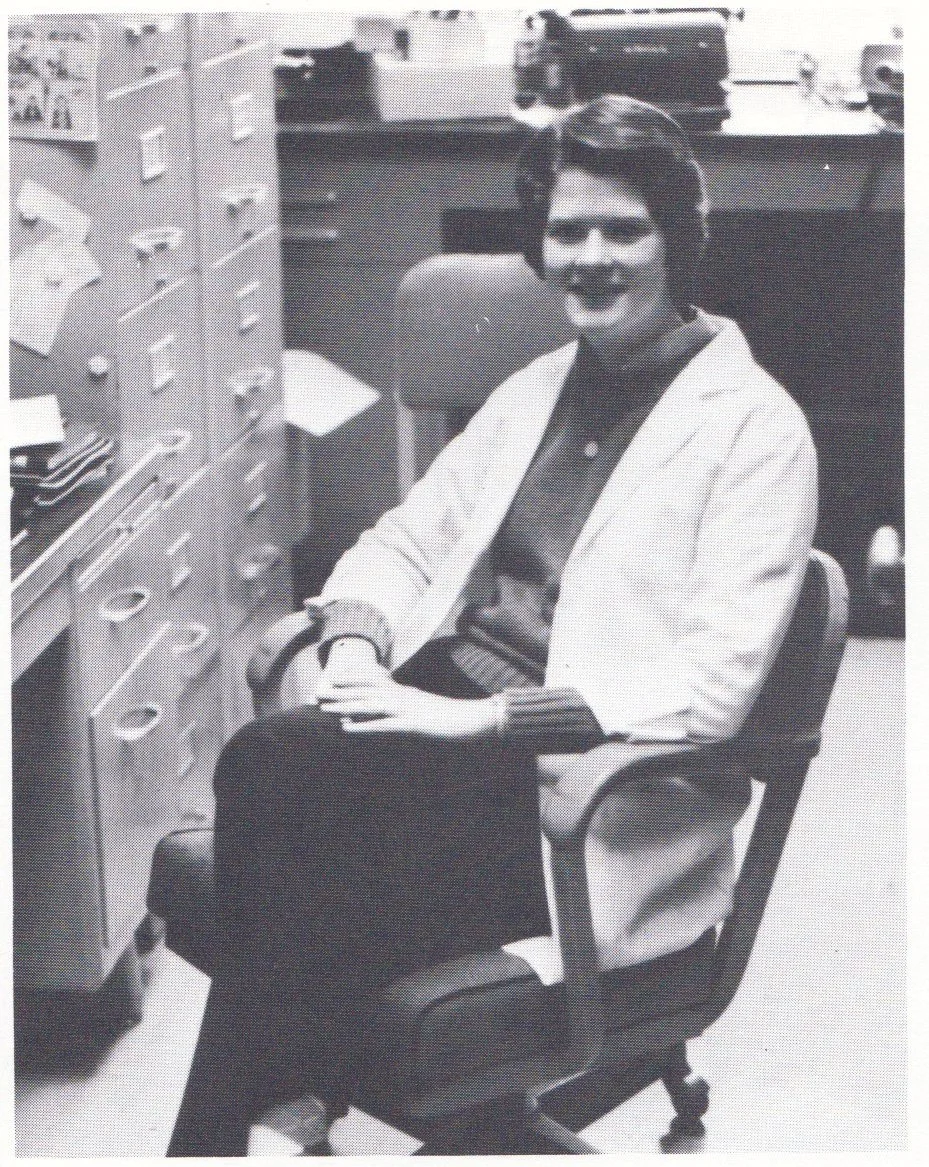
It would have to be the meetings with the students. I was taking over from a faculty member who had just retired. The very first thing I did was to start meeting with his students, the ones he was going to be doing the senior tutorial research project with, and learning all the different things that they were planning to do.
I thought, oh my gosh. I don't know how to do any of these. I said to the students, “Look, I know a lot about my field, but I don't particularly know anything about the chromosome makeup of East Coast clams. But we'll do it together, and we'll learn together.” And that's what happened over the years, I was learning with my students, from my students, at the same time I was teaching them. And that's what really engaged me.
You talked about that faculty and student relationship, but do you see any other similarities between Chatham then and Chatham now?
I think the location can't be ignored in terms of a key to what makes Chatham what it is. There are lots of beautiful campuses in this country. I would certainly stack Chatham up against any of them. Our location being a quiet, beautiful setting, but still in the city—I won't say it's unique, but it's certainly special. And it allows students to have a pond to sit out by and read. Yet, they can walk down the street, catch the bus, and go to any big company, hospital, museum. It has the best of both worlds, and I think that is one of the many things that makes Chatham special. We are very fortunate to have this setting in Pittsburgh. It's a great combination.
And is there anything that's different that you think is a good change?
I think certainly, while it was traumatic at the time, going all-gender was a good thing for Chatham. We were shocked at the time. The research all said, when an all-women’s college goes co-ed, you'll get a few male students coming in at first. You will grow slightly.
We were shocked. The numbers from the previous year to the 2015 year were amazing. It wasn't just that we had more students who were male. We had more students who were female. And our basic mission, which was, at that time, was to provide education for women—we were educating more women. And we were educating more people, period. It really opened up a lot of discussion about what our mission was in terms of education, and the idea that we didn’t want to limit what we could offer.
We'd started it, really, in some ways, with the graduate education, which was not limited to women. But by doing that at the undergraduate level, I think we were all happily surprised by the pent-up demand there was for a Chatham education out there by everybody.
Could you tell me, what is it that you like about teaching? How long did you teach here?
I guess it's a little trite to say, but when you start talking about something you enjoy talking about, and you're looking into the classroom, and you're trying to make that connection. Then, you're describing something, and all of a sudden, you see that light flash. Oh, you get it too. You see what's fun about this. You see what's cool about this. And it doesn't always happen, I know. But, being able to share something that you're so passionate about, and you find so cool— it's like you've just been to a movie, or you've just read a book, and you start telling all your friends about it until they're sick about it. Well, that's what teaching is like, because you love your subject, and you want everybody else to love it too.
More importantly, you want them to understand it in the context of the broader education, which is more of a challenge. And of course, it doesn't hurt that I was teaching the coolest subject in the world, which is genetics.
What's changed since you've become president? How is the work different from your last position?
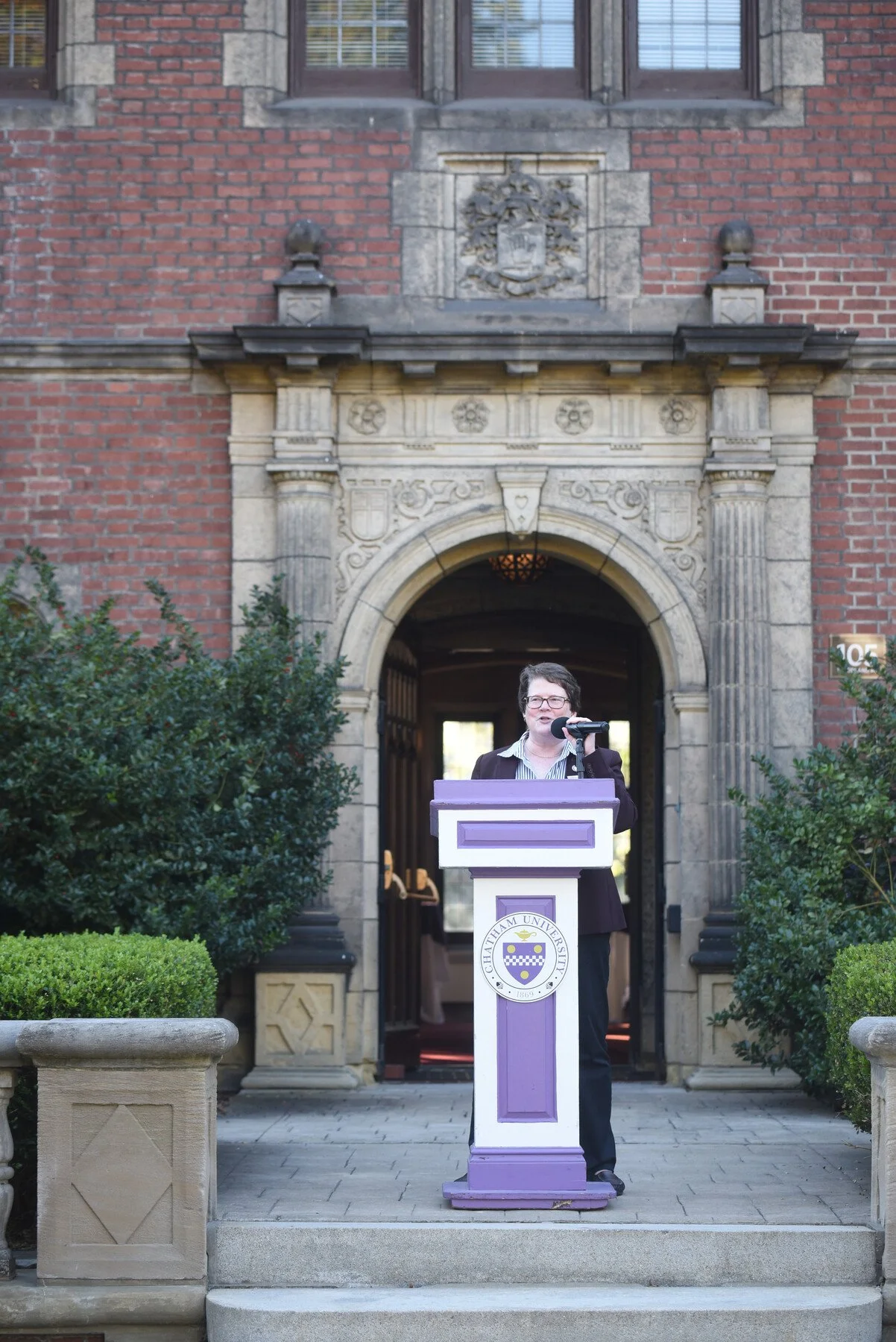
Lambert speaks to guests at the 2025 Homecoming and Alumni Reunion Weekend.
There were a lot of things that I saw that needed to be done, and I felt like I had the expertise and experience, having been a professor so long, to see what needed to be done and to try to help fix things. One of the problems that we encountered when we went all-gender was that rapid period of growth—we never really were prepared for it, and we were always playing catch up with policies, with procedures, with processes that we were continually tripping over. I saw I could come in, I could make a difference. I could make things better.
My background, and my knowledge of people and the school, I think, comes together now, in this role, in a way that I never expected it to. Some people want to become presidents because they like the title and they like the job, they like the perks. For me, it's maybe the most effective way to solve problems. And what I have found since becoming president, is that the job is not at all what I expect it to be. It's less about being down in the data in the weeds—and, again, I love my data—but it's a lot about storytelling. And I know a lot of good Chatham stories. I can go out, and I can talk to people. I'm very comfortable talking. It’s almost like all of the things I learned along the way, unbeknownst to me, were preparing me for this. I found it much less difficult than I thought it would be.
There are so many things that are still to be done, but when it comes to trying to work with a team, to tell stories, to analyze data, it's like my whole career’s prepared me for that. I'm comfortable with it. I had to think long and hard before saying yes, but I am absolutely happy where I am now.
What problems are you focused on solving? What goals are you focused on?
I am not going to be president forever. I'm not going to be here for some 20 odd years. Not at my age. My goals are more over the short term. They are to continue to support the academic excellence that makes Chatham Chatham. That connection that we've talked about with the students and the faculty, and the staff, because the students connect more to than just faculty. They connect to this whole Chatham community, the idea of one Chatham. We are all here, as a community, trying to make this education better for students, but also to be responsible, part of a broader community as well. I want to make sure that the things that are working continue to work. That's one.
Then, we need to get on a more stable financial basis. That’s something that I can bring my analytical skills, along with my team members and building a strong team, to to make sure that we recognize problems before they come up and fix the problems that we have. We’ve got to do a better job of catching problems when they're small and fixable before they get larger. That’s another thing.
I want to leave Chatham in better shape when I finally retire. That includes sound fiscal and increasing our position in the community—the Pittsburgh community, our broader community of alumni, donors, supporters—while still maintaining and nurturing that academic excellence. I want to leave Chatham a better place. I know we can do it. I really do.
I’m a realist. This is a tough time for higher education. If I really thought that a smaller university, like Chatham, couldn't make it—I'm not one to beat my head against a wall. But I see a clear path forward for us. And I know we can do this.
When you talk about making Chatham a better place, what kind of place do you want Chatham to be?
I think Chatham is pretty outstanding the way it is. The great features, I've already mentioned. I don't want that to change. But I want us to focus more on those good things. I want us to streamline and focus and not get distracted by getting involved in things that are not directly mission focused. I want us to stop being the hidden gem that everyone calls us. Being a gem is fine. Hidden is not.
When Quantum Theatre was on campus over the summer, and I went and chatted with people who were attending, people said, “I've lived here for 30 years, and I've never been here.” No, no. There's something wrong here. We've got to make sure that we keep doing what we're doing, but we need to get the recognition for it.
As you know, this interview is for the alumni magazine, so I did want to ask, do you have any plans to engage alumni?
Absolutely. I think that the alumni, more than anyone else in the world, will recognize the value of Chatham. And I want to engage with them more, see what they can do, what advice they have—everything from what can we do better on the academic side to how can we make sure that Chatham is recognized for its accomplishments. They [the alumni] are our biggest accomplishments. I’ll be looking for suggestions about how we can raise Chatham's profile, how we can feature the work and accomplishments of our alumni. That's what will inspire the current group of students. If I can get out to visit student groups, I want to do that. I can always set up video calls with m alumni groups if I can't make it out there, but I absolutely want to hear from them.
This interview was conducted and edited by Mick Stinelli.
Mick Stinelli is the managing editor of the Chatham Recorder and the editorial and communications manager at Chatham.