
For These Students, OAAR was a Huge Help
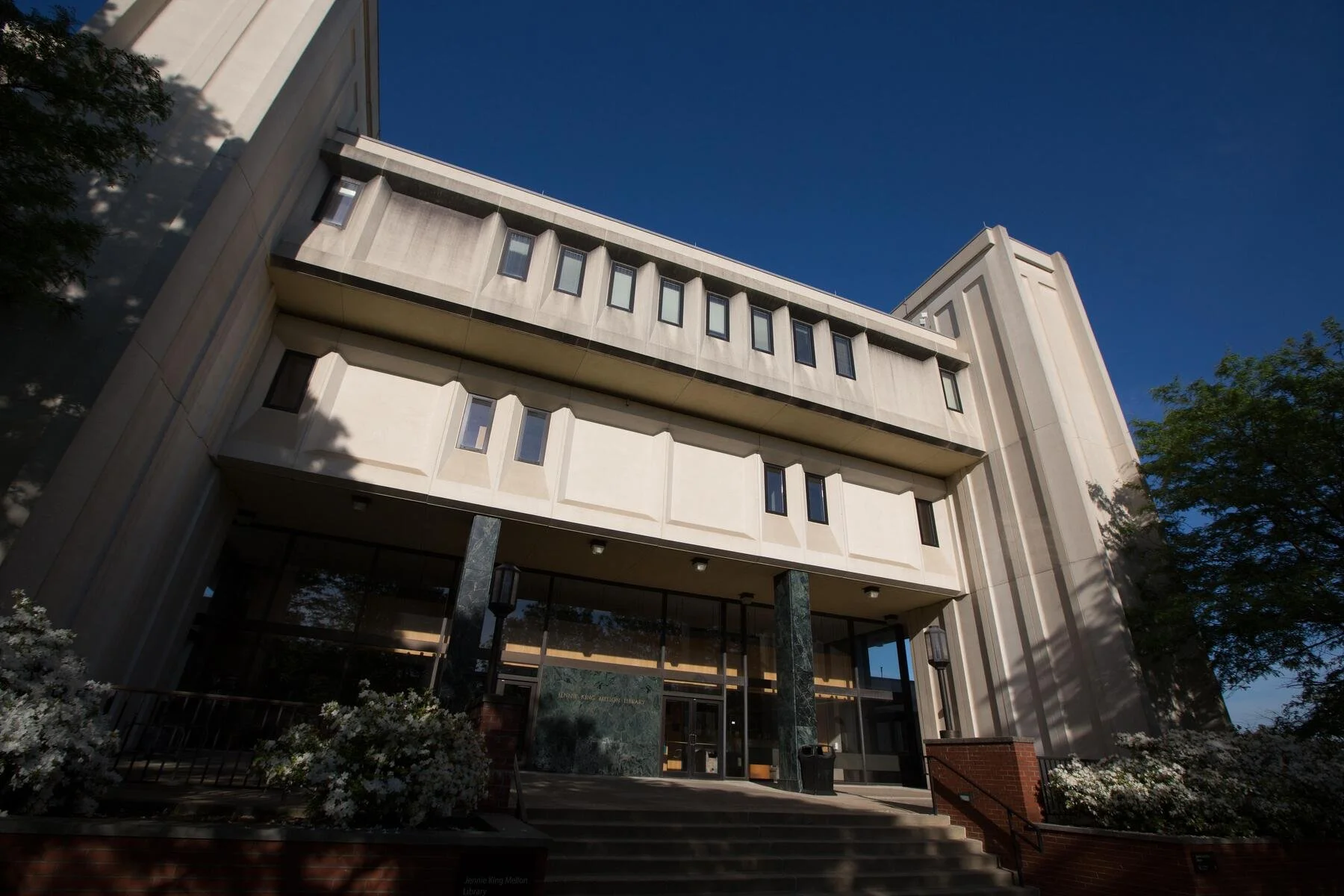
OAAR is located on the third floor of the Jennie King Mellon Library. (Annie O’Neill)
Carmela Capasso ’27 first heard about the Office of Academic & Accessibility Resources when she was touring Chatham’s campus. Because Capasso has Crohn’s disease, her mother suggested she contact them for accommodations upon starting college.
Reaching out to ask the office (commonly called OAAR) for accommodations wasn’t easy at first, said Capasso, who studies molecular biology.
“I was scared my first year,” she said. “I was scared of people thinking I was trying to get out of work or something. I really didn’t want my professors to think I didn’t care about my classes.”
But when she experienced medical issues that caused her to go to the hospital during her first term, her mindset changed.
“I’m kind of grateful for that, because it forced me to use OAAR and get comfortable with that process,” Capasso said. “And all my professors were so nice about it. Some of them sent me emails asking how I was doing. I should not have been scared to say, ‘Hey, I can’t come to class because I’m in the hospital.’”
What is OAAR?
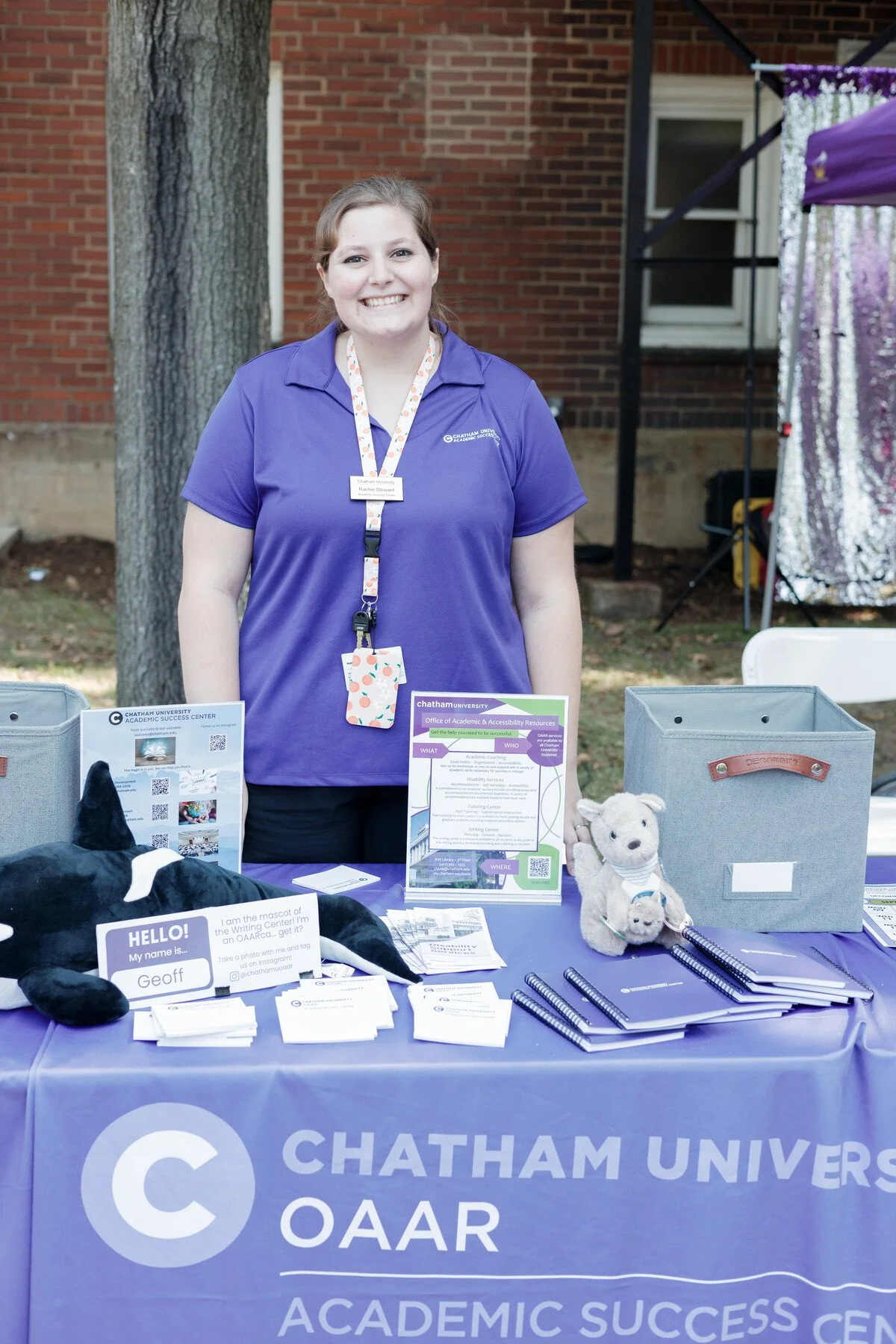
Rachel Steward represents OAAR at a student engagement fair. (Kyle Ferreira)
The Office of Academic & Accessibility Resources offers a wide array of academic and disability support services for the entire Chatham student population.
Academic resources offered by the office include the writing center, tutoring, supplemental instruction, and more.
“A lot of what we do is personalized to each student,” said Steward, the associate director. “Not just in terms of accessibility, but also academic support. Everyone is drastically different in their needs and how they learn and operate, so we have to tailor it to each person.”
The accommodations piece of OAAR covers disability support. The office focuses mainly on academic accommodations for students, such as additional testing time or permission to leave class to manage symptoms caused by a disability.
Getting Accommodations
Olivia Veldhuis was diagnosed with ADHD at age 45. She’s currently taking classes at Chatham as she prepares to apply for the Master of Physician Assistant Studies program.
Before Veldhuis was a student here, she was studying at the University of Idaho; that’s where a classmate hipped her to the fact that she could get accommodations because she has attention-deficit/hyperactivity disorder.
So, when Veldhuis came to Chatham, one of the first offices she got in touch with was OAAR.
“It’s made an enormous difference,” Veldhuis said. “I already went through college once without being diagnosed. Now, going to school with support, it’s totally different.”
The accommodations provided by OAAR allow her to take more time on tests. “I’m not as stressed to go into a test anymore,” she said. “I have enough time. I don’t need to stress about whether I’m going to finish on time. I’ll even have time to look over my answers at the end.”
It’s a similar story for Sofia Zayas ’26. She transferred to Chatham in 2024 to study economics. In high school, Zayas said, she was a good student. But when she got to college, she found she struggled to finish tests on time and would get overwhelmed by some assignments.

Zayas played softball for Chatham during the 2024-2025 season. (Jeanine Leech)
Before she came to Chatham, she found out she had a learning disability that can make it difficult to process words while reading. “That was like, OK, I’m not crazy,” Zayas said. “I felt really validated from that.
“So, when I came to Chatham, I spoke to OAAR and got situated with my accommodations,” she continued. After talking with OAAR, Zayas was able to get extra time on tests, which she can also take in a quiet location if needed.
“I feel like my testing experience is completely different, and I’m seeing that in the results as well,” she said.
Zayas said there’s also a nice amount of flexibility with how she’s able to use those resources. “If I don’t need that extra time … I can just let the professor know I’m taking the test in the class and take it with my peers.”
Academic Resources
Then there’s the other piece of OAAR—academic resources. Those include the office’s writing center, tutoring services, and academic coaching.
Zayas has worked with OAAR to tutor students in managerial economics and said she might do it again next year for another course. “That was a really good experience,” she said. “I got to meet a lot of people through that too.”
Zayas also recently went to the writing center for help with brainstorming and structuring a research paper. She said she plans to return to OAAR’s writing center again to get more help on the paper once she finishes a first draft.
OAAR also offers academic coaching, which is different from what’s offered by the Academic Advising Center. “Academic coaching is more about individual students and what their academic style is,” Steward said. “I basically sit down with each student and go over organizational strategies, scheduling, putting assignments on a calendar, procrastination—it can be almost anything.”
Whether you need accommodations in your classes, or if you’re looking for extra academic support, make sure you stop by OAAR to see how the office can help you.
“Anyone who thinks they have a reason to go to OAAR—it doesn’t hurt to go there,” Veldhuis said. “If someone feels nervous about asking for help, just ask. Even if OAAR can’t help, they’ll tell you where to go.”
Capasso echoed that sentiment. “Don’t be scared to ask questions,” she said. “Everybody at OAAR is very kind and very understanding. If you’re ever unsure about something, you can ask them, and they will help you.”
Learn more about the Office of Academic and Accessibility Resources at chatham.edu.