
How a State Grant Helps Chatham Ease Food Insecurity
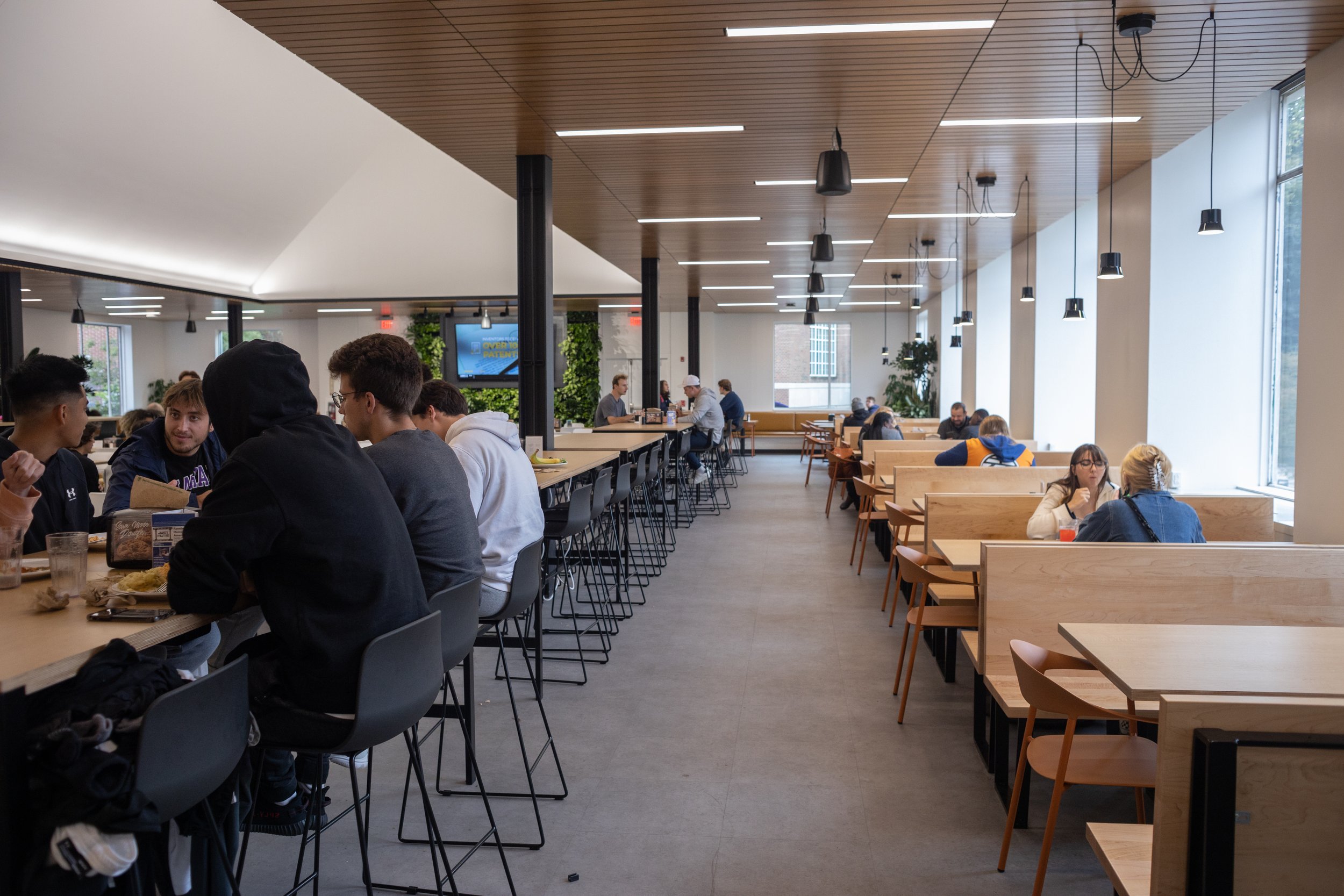
Students eat in Anderson Dining Hall. (Kyle Ferreira)
Thanks to a $20,000, one-year grant provided by the Pennsylvania Department of Education, Chatham University will have more resources than ever to address food insecurity among students.
It is a nationwide concern. According to Temple University’s Hope Center for Basic Student Needs, about 41% of college students experience food insecurity.
Pulse spoke to Hayden Barns, the nurse at Shadyside Campus, about the ways the PA Hunger Free Grant will be used to help students.
Providing easy, stigma-free access to shelf-stable items
There are “Essential Needs Pantries” at Shadyside Campus, Eden Hall, and Chatham Eastside, providing shelf-stable foods and other items for students at no cost.
At Shadyside, the pantry mostly stocks shelf-stable items, as well as personal care items like menstrual products. The Hunger Free grant keeps these pantries stocked with food throughout the school year.
Additionally, the Eden Hall and Chatham Eastside pantries also have a refrigerator and freezer to keep fresh and frozen foods in stock. Those were purchased thanks to the money provided by the Hunger Free grant.
The Pittsburgh Community Food Bank has also partnered with Chatham to provide free, fresh produce once a month via farmers-market style giveaways at the Shadyside Campus. These markets have included fresh potatoes, corn on the cob, tomatoes, cabbage, onions, greens, carrots, and other items. Students, staff, and faculty all have access to this market on a first-come, first-served basis.
Increasing access to grocery stores, farmers markets, and community food pantries
In addition to the fresh produce provided by the Pittsburgh Community Food Bank, Chatham also has a partnership with the Squirrel Hill Community Food Pantry, located near campus in Greenfield.
Chatham students can go to the pantry, located on Hazelwood Avenue, and get free food with their Chatham student IDs.
“And that's a resource that I try to emphasize, because as far as food pantries go, it's a really, really nice one,” Barns said. “They have meat, eggs, fresh produce, and you get to pick your own food instead of just picking up a pre-packaged box.”
Better break boxes for students staying on campus between terms
Students staying on campus over fall, winter, and spring breaks this year will receive more, healthier items in their “break boxes,” which are filled with food and given out during these periods when the dining hall closes or is operating on a limited schedule.
“It's not the intention of those break boxes to provide all the food that students would need over break, but to assist students who are living on campus, who either can't afford food or are limited in their options because of dining hall hours,” Barns aid.
Other resources for students
In addition to the Essential Needs Pantries, partnerships with community groups like the Squirrel Hill Community Food Pantry and the food bank, and break boxes, Chatham’s Student Health Services is also going to use these grant funds to expand education for students about what resources they have access to.
That includes information about applying for the Supplemental Nutrition Assistance Program (SNAP), resources about local food pantries and meal prepping, and potentially expanding the fresh produce distribution to Chatham Eastside.
“We're also using some funds to buy reusable containers, lunch boxes, and freezer packs to encourage students to meal prep, pack their lunch, and bring it to school,” Barns said.
There’s also plans to use these funds to provide more meal vouchers, which students can use to get free meals at Anderson Dining Hall.
Additionally, Barns said they want to grow Chatham’s hunger free task force, hopefully bringing students into the conversation. “We haven't previously had students involved. But we've gotten some interest and we're looking to expand that group,” she said.