
Three Faculty Members’ Overseas Experiences
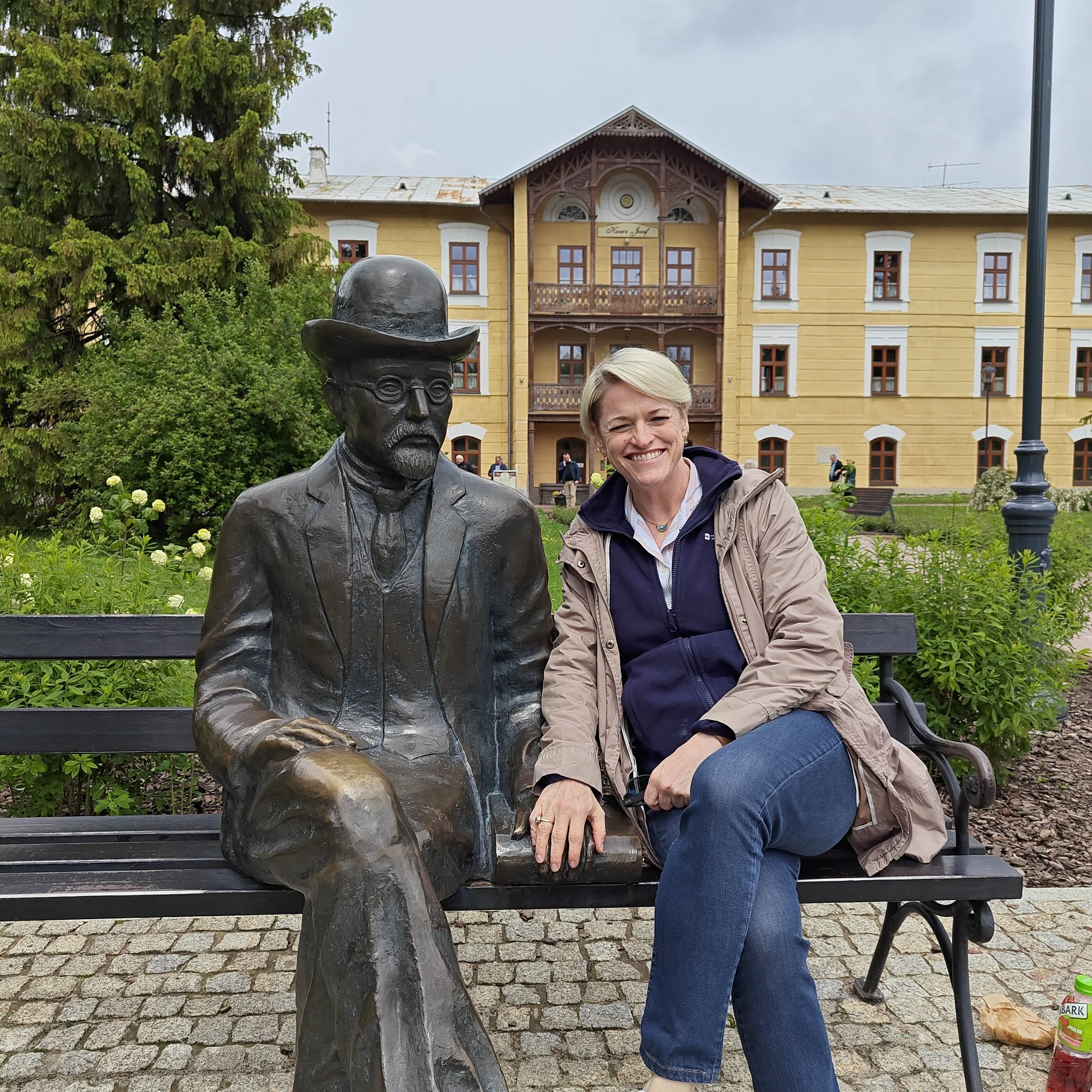
Professor Carie Helms poses with a statue in Lublin, Poland. (Courtesy of Carrie Helms)
From sailing around the lagoon surrounding Venice, Italy, to the walking the halls of a Polish university with a history as a haven from Soviet dogma, a few of Chatham University’s humanities professors engaged in fascinating scholarly trips to Europe last year.
Take a look at their travels and get a peek at what’s next for these faculty members at Chatham.
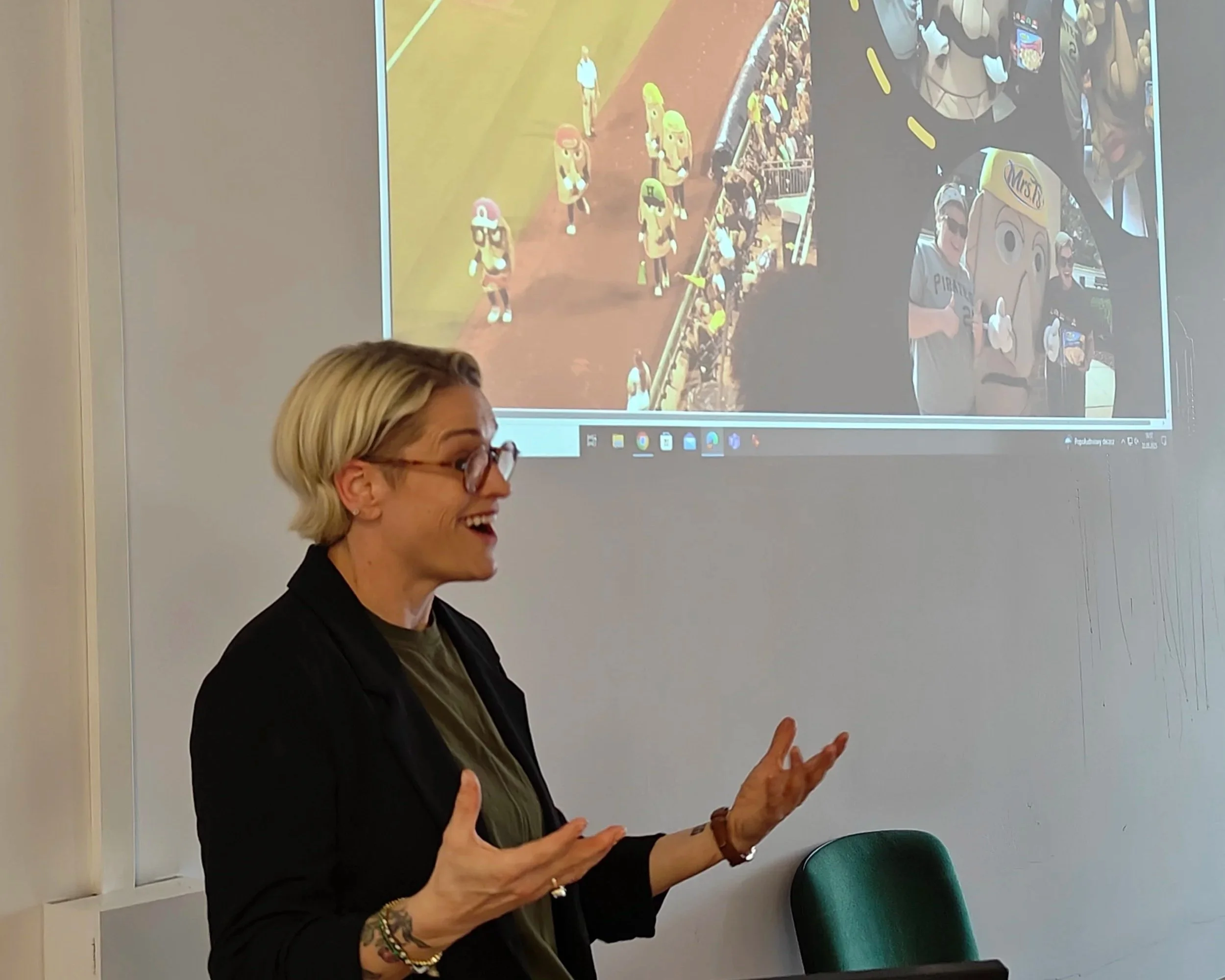
Carrie Helms begins a lecture at the John Paul II Catholic University of Lublin with a lesson about the Pittsburgh Pirates’ pierogi mascot race. (Courtesy of Carrie Helms)
Carrie Helms
Associate professor of English, chair of humanities & education department
Visited Poland in May 2025
In May, Carrie Helms flew to Poland for five days of educational exchange at the John Paul II Catholic University of Lublin as part of a visit funded by the country’s Ministry of National Education.
Between a short course aimed at doctoral students and some lectures for undergraduates, Helms shared her knowledge and passion for studying cookbooks. In the class “Methodologies of Cookbook Scholarship,” she spoke to students whose studies spanned literature, rhetoric, history, communications, race, and women & gender.
“Not all of them were interested in American texts or contexts to begin with, but they were interested in ways they could apply these things to texts from their space,” Helms said.
But there were two students both working on dissertations on American food culture—something connected to the research Helms does. “I think they got the most out of the class, in terms of pages they would add to their dissertations.”
Of course, the trip couldn’t be entirely focused on lecturing about food; there had to be some eating. “They brought me a lot of food gifts,” she said. “Every time we had class, someone had something to share.” There were regional dishes she’d never had, like liver and apple.
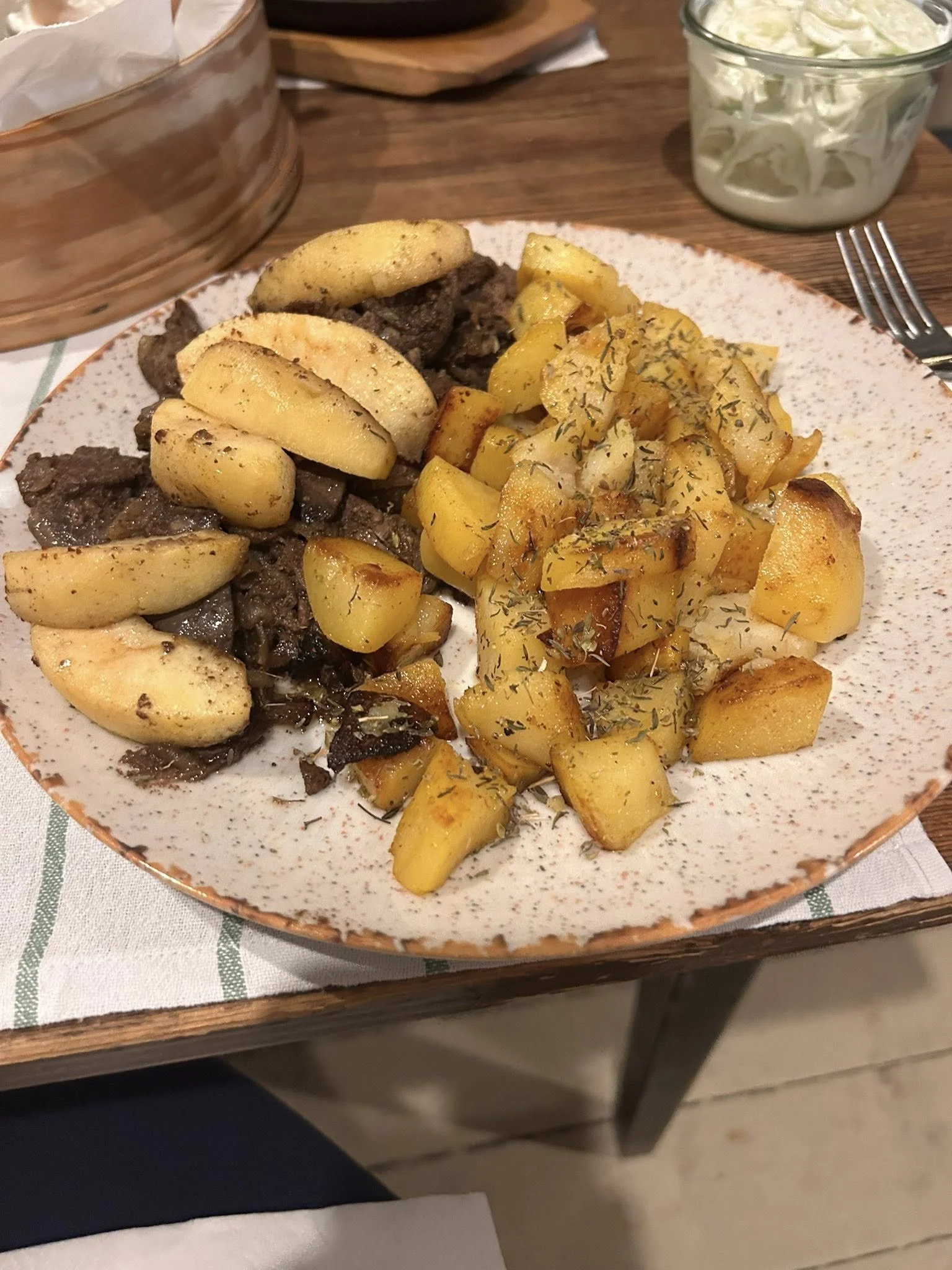
A serving of liver and apple. (Carrie Helms)
One student who came from a dairy farming community brought cottage cheese, a sour cream and beet soup, and kefir. Another brought a box of chocolate-covered plums. Someone else made rhubarb cake, and there were lots of small candies carried into class from convenience store shelves. “I learned so much about Polish food from them,” Helms said.
But Helms joked that pierogi—that delicious dumpling often associated with Pittsburgh’s Polish immigrants—perhaps isn’t as popular in Lublin as it is in western Pennsylvania.
“The thing that binds Pittsburgh and Poland is the pierogi,” Helms said. She’d start her undergraduate lectures talking about the pierogi mascot races that happen during the Pittsburgh Pirates’ home games.
“So, I showed them a YouTube clip of the pierogis running, and they were like, ‘No one even likes that,’” she said. “One student said, ‘Even if you do like them, don’t tell anyone you do. It’s gauche.’ It’s too obvious to like pierogi; it’d be like building your identity around liking hot dogs or hamburgers.”
Nevertheless, when her birthday occurred during her trip, Helms marked the occasion with a pierogi tattoo. “It was a good way to spend a birthday,” she said.
With an edited collection of writing connected to her travels, called Food and American Television: Constructing Identity in Bite Sized Narratives, forthcoming from Routledge next year, Helms said she hopes this trip will be just the beginning of her cultural exchanges in Poland.
“There were lots of other discussions of future opportunities,” she said. “What would it be like to bring a group of American students to Poland?” And she hopes interested Chatham students will let her know about their desire to potentially travel there with her.
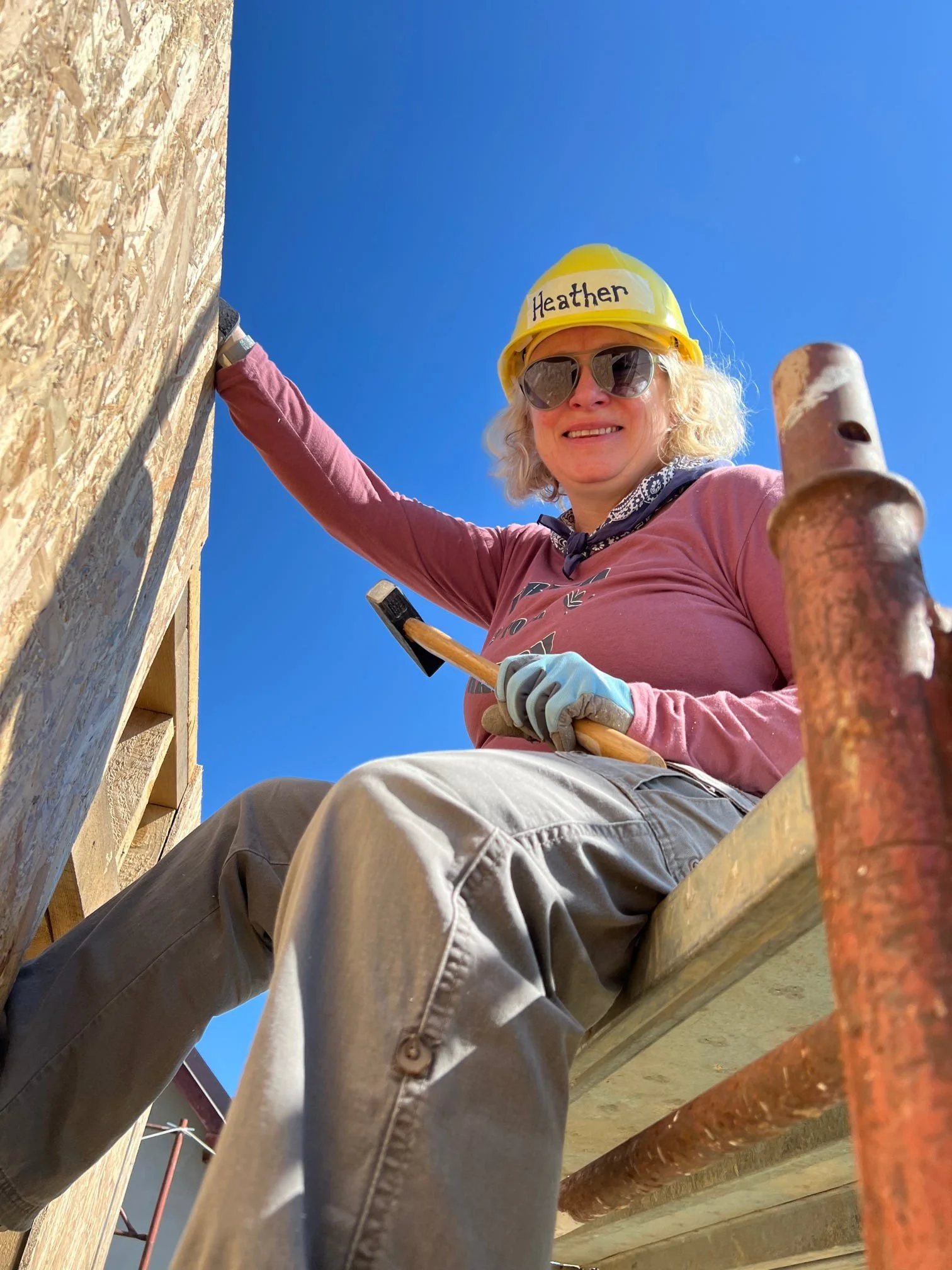
Heather Cunningham works on a construction project as part of her work with the Fuller Foundation. (Courtesy of Heather Cunningham)
Heather Cunningham
Associate professor of education and education program coordinator
Visited Romania April-May 2025
Heather Cunningham has been a traveler since she spent a year living in rural Honduras teaching English as a second language after she finished her undergrad. This summer, she spent two weeks in Cluj, Romania working with the Fuller Foundation.
There, she spoke with teachers, students, and professors to learn about Romania’s multilingual education system—something that connects to her own studies.
“My research in the past decade, pretty much since my dissertation, has looked at how a person’s cultural and racial self shapes how they perform their work as a teacher and how they interact with students,” Cunningham said. “That has to do with your racial identity, your cultural identity, your gender identity—all the different ways we are shaped. Language is also one of those identities.”
In Romania, even some of the youngest students go to "mother tongue" schools, where they are educated in their native language and also learn Romanian, Cunningham explained.
That style of education continues through university. Cunningham spoke to a professor who teaches in both Romanian and English. Majors were organized by English, Romanian, and Hungarian tracks, with German and French options, too.
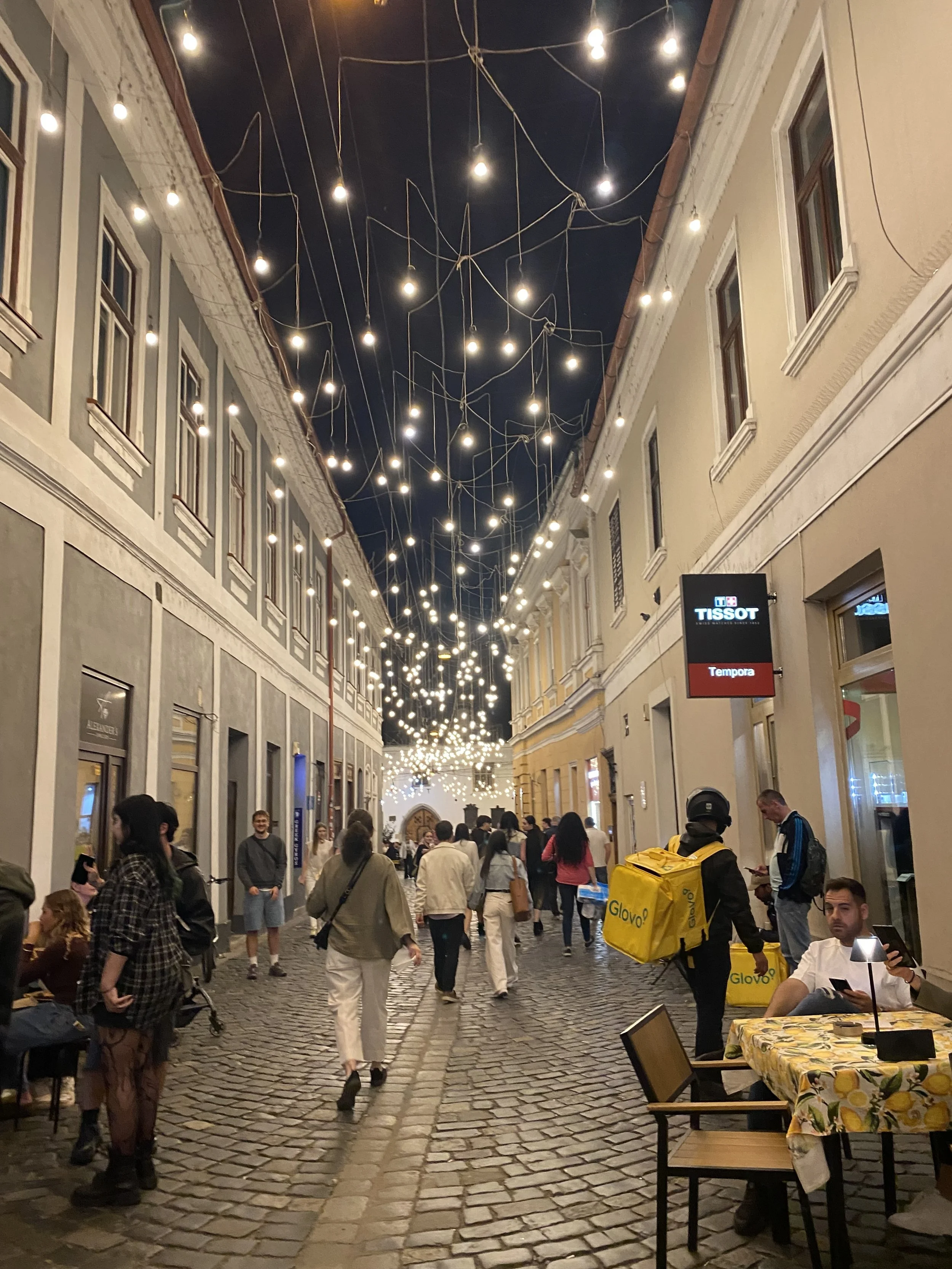
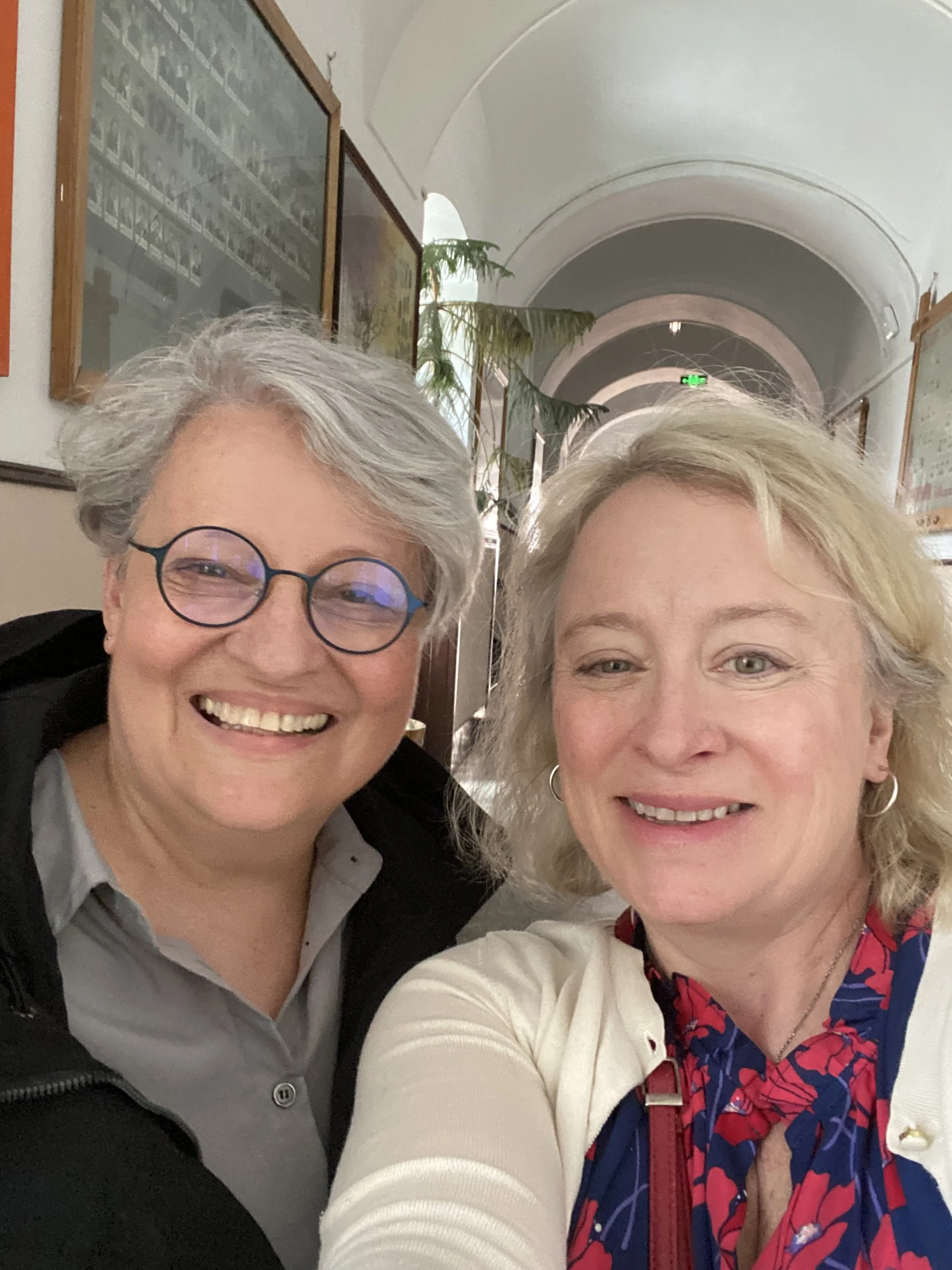
“I was just really wowed with learning how that came to be so,” Cunningham said. It had to do a lot with the overlap of Romania’s history as part of the Roman empire, the fact that its border used to be controlled by Hungary, and other social and political contexts.
For a scholar like Cunningham, learning about the multilingual school systems provided both a window into the past and context for the present. “The more you understand a person’s language and how they use it to express themselves, the more you get to know them,” Cunningham said. “I think it’s very fascinating.”
Next, Cunningham made a visit to a nearby Hungarian-language high school recommended by a Romanian professor. She spoke with a Hungarian language teacher and a high school senior, the latter of whom had just returned from studying abroad in Kansas. “I just loved talking with them and with the student in particular, seeing what was interesting to him and what the school was like,” she said.
At the end of the trip, Cunningham found herself falling in love with Cluj, Romania’s second largest city and the historic capital of Transylvania. “It’s very walkable, it’s about the same size and climate as Pittsburgh,” she said. “There’s a lot of comparisons between the Appalachian Mountain Range and the Carpathian Mountains.”
Inspired by her trip, she plans to write a paper about the layers of politics and history that shape the current education landscape in Romania.
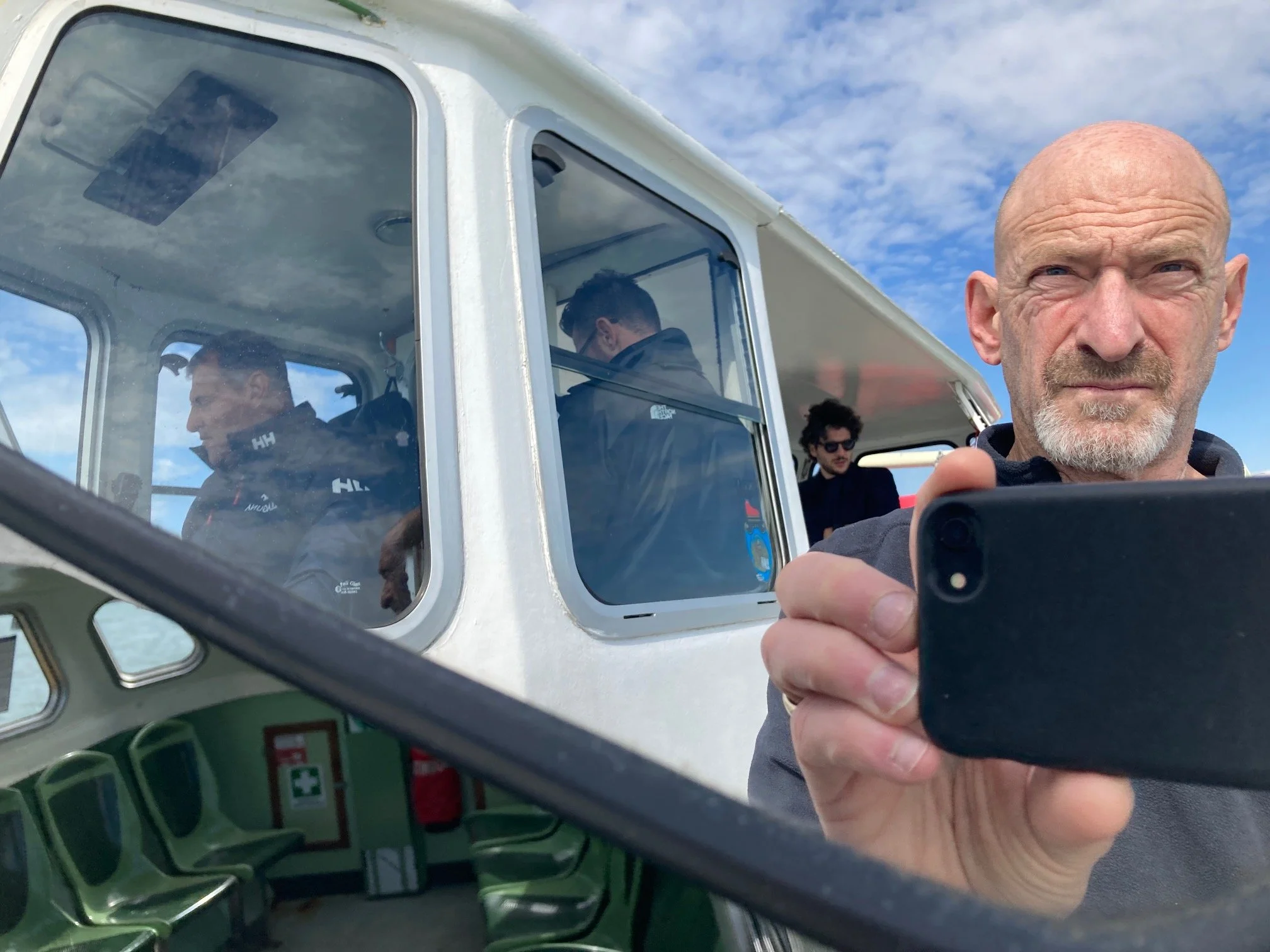
Marc Nieson takes a selfie in the mirror of a boat in Venice, Italy. (Marc Nieson)
Marc Nieson
Associate professor, MFA in Creative Writing program
Visited Venice, Italy from March-April 2025
Marc Nieson has history in Venice.
He first traveled there as a young man in on a whirlwind trip across Europe. “It’s a singular city in the world,” he said. “It’s a bizarre, beautiful place. My head was spinning. I felt I was lost there; it’s a place you’re supposed to be lost, in many ways.”
He knew then that he wanted to come back, and he did several times over the next few years,living there for months at a time. But he hadn’t been back for an extended stay in decades—until last year, when he spent two months in residence during his sabbatical.
He chose to return so he could perform on-site research for his upcoming essay collection, Treading the Tides, in which he’ll explore varied perspectives on sustainability. Nieson saw Venice, with its narrow canals and an infrastructure buckling under rising tides and an ever-increasing flood of tourists, as the perfect location for the book’s centerpiece.
“I wanted to go back there and check in on a few things,” he said. “We all end up, from our travels, finding a place that is your special place, where you feel you really belong on some level. Venice is it for me. More than anything, it’s about the rhythm. It’s a slow rhythm; you can’t get anywhere fast.”
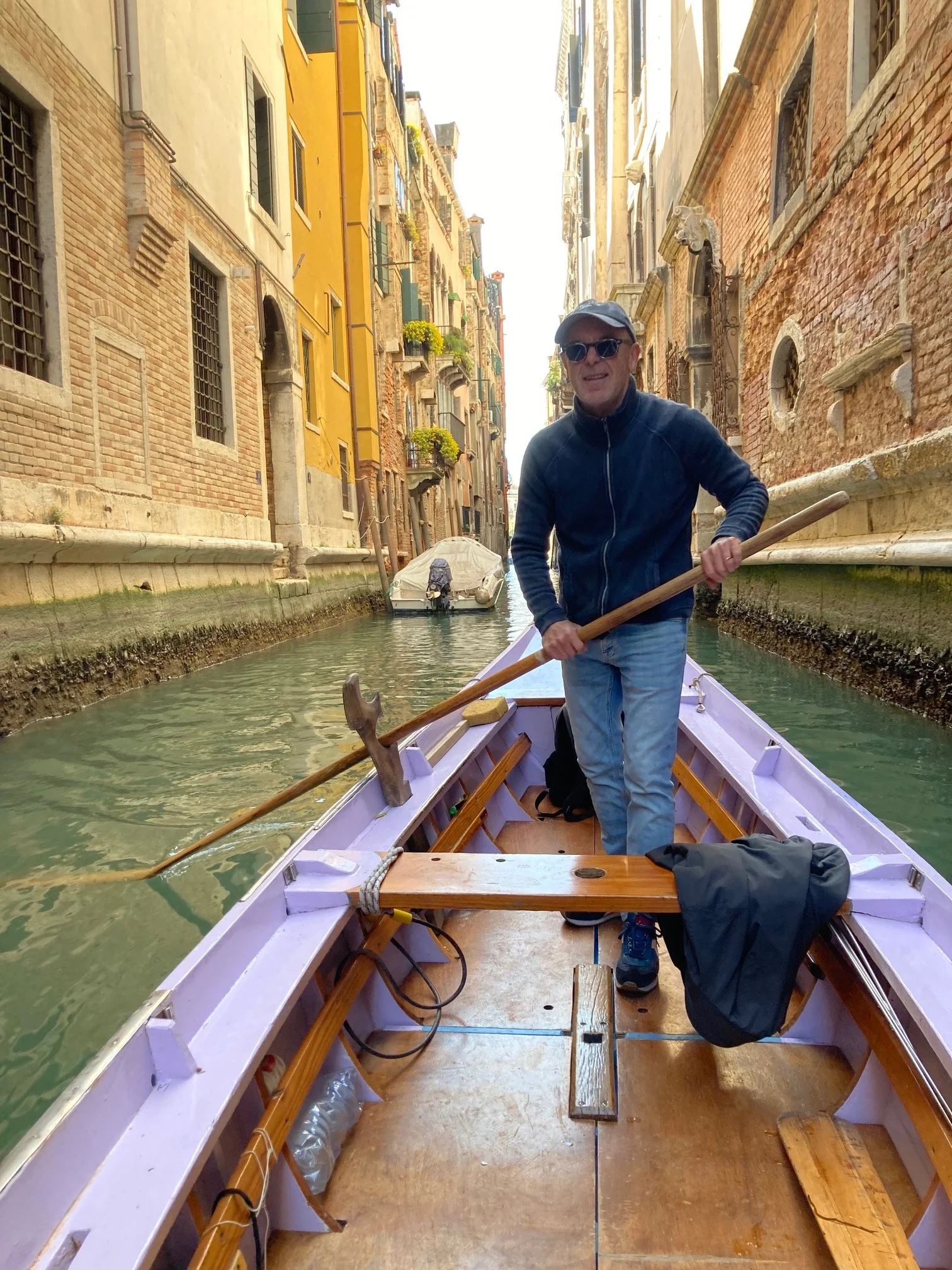
Nieson’s friend, the vogatore. (Marc Nieson)
Living in an apartment overlooking a public square and a couple of canals, Nieson went to work researching the social and ecological changes that have affected one of Europe’s most beautiful cities. He connected with an old friend, a onetime postman now working as a vogatore—a rower of a small boat. He took Nieson out to remote corners of the surrounding Venetian Lagoon. There, they saw the effects of annual flooding, marshland erosion, biological degradation, and other changes to the area.
“There’s an area in the lagoon now where there are two flocks of flamingos,” Nieson said. “You’d never think they’d be in Venice, certainly not at that latitude. They started showing up seasonally some 10 or so years back, and now they’re there year-round.” That provided Nieson with a vibrant image of how much the temperature of the water and other aspects of the lagoon had changed.
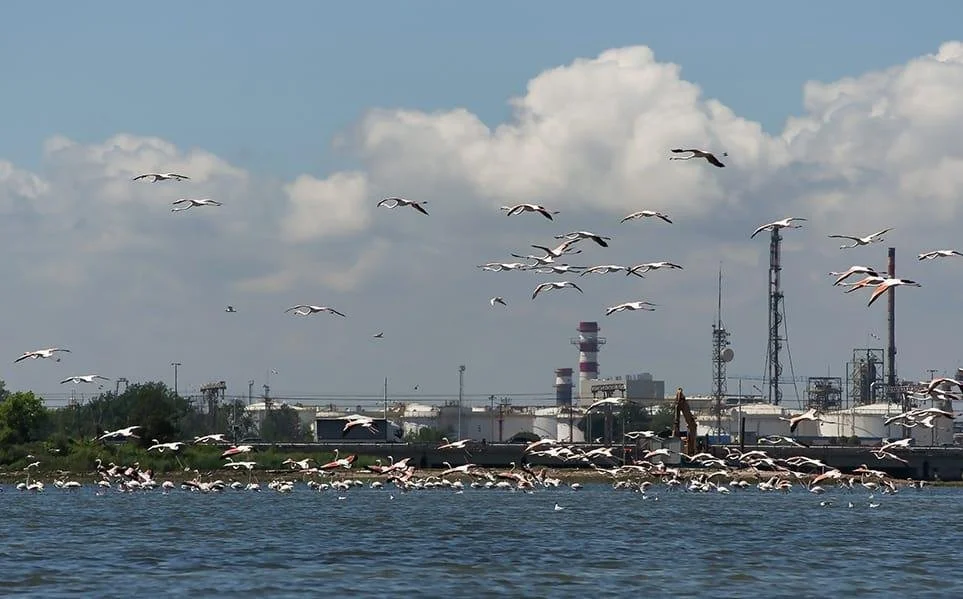
Flamingos fly by an industrial area near the Venice Lagoon. (Marc Nieson)
While Venice provides the spine of the collection, the rest of Treading the Tides will cover other topics and locations, including some closer to Pittsburgh. For Nieson, whose writing has covered fiction, personal memoir, and screenplays, focusing on climate change for this upcoming book started with thinking about what he felt compelled to write at his age and in this time.
“I’m living at this period of time, and writers get a chance to weigh in on what’s going on,” Nieson said. “I can’t think of anything more important than to get involved with sustainability at this juncture.”
This story was originally published in the Winter 2026 issue of the Chatham Recorder alumni magazine.
This story was written by Mick Stinelli.
Mick is the managing editor of the Chatham Recorder alumni magazine and the editorial and communications manager at Chatham University.