
Marley McFarland ’27 on Her Experience at the COP30 Climate Talks
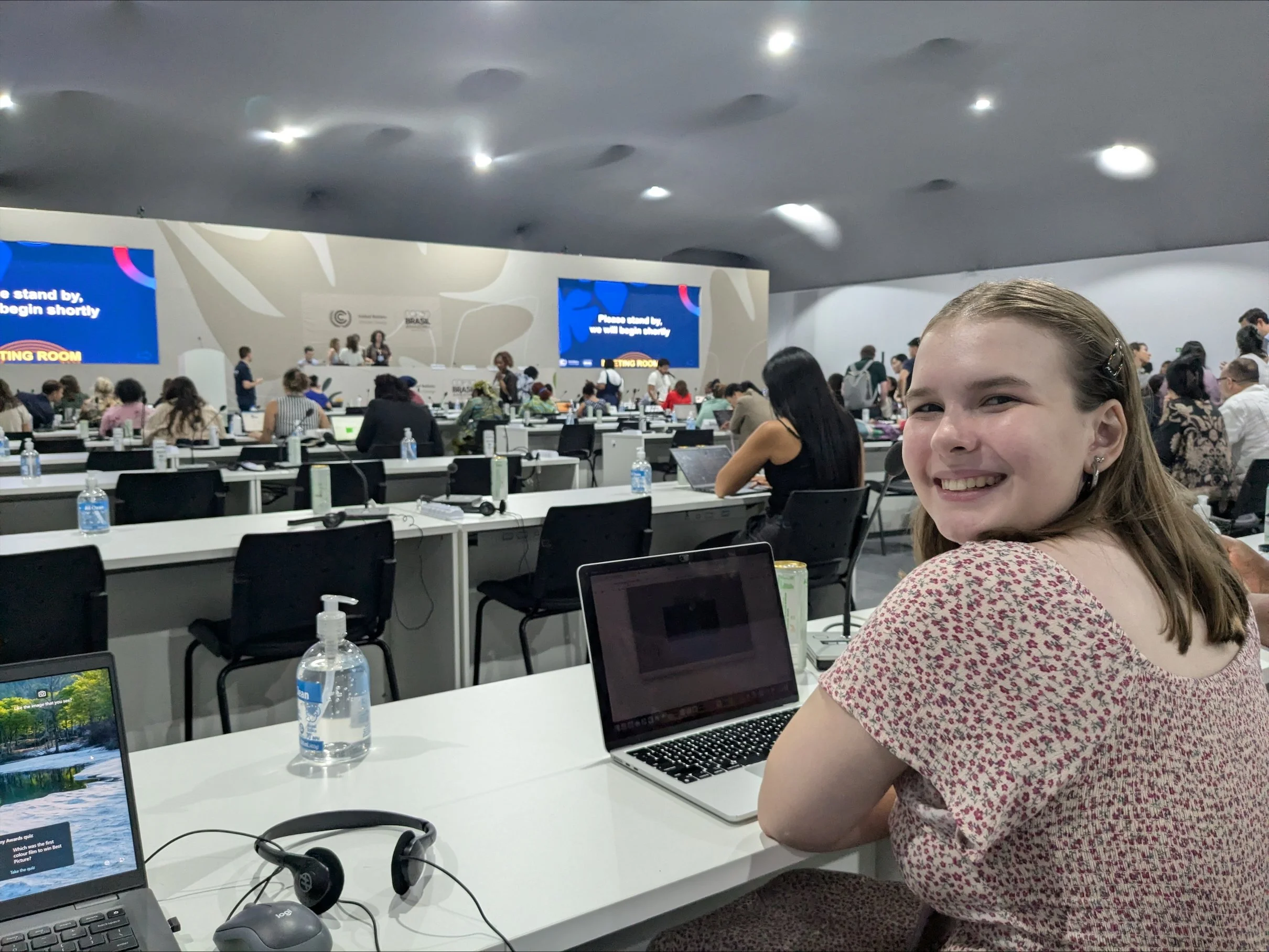
Marley McFarland sits at a desk at a UN COP 30 event in Belém, Brazil. (Courtesy of Marley McFarland)
Marley McFarland ’27 had been waiting for an opportunity like this for a long time.
A member of Phipps Conservatory’s Youth Climate Advocacy Committee and a student at Chatham University, McFarland was excited when, last month, she went to the United Nations’ climate change conference, COP30, in Belém, Brazil as part of group of observers with Phipps.
“This was my first time out of the country,” she said. “I was very overwhelmed. I was experiencing culture shock a lot of the time.”
McFarland, who grew up just outside of Pittsburgh in Swissvale, came to Chatham specifically because of the University’s commitment to sustainability and its Eden Hall Campus. She majors in sustainability and creative writing.
“I’m interested … in communicating with people on issues that are hard to understand and making people want to care about them,” she said. Art and writing, she added, are some of the best ways to reach people when it comes to climate change.
At Chatham, McFarland has taken courses on wilderness and literature, and she is looking into a course on environmental children's fiction and film. She also writes for the Communiqué, the student-run news outlet.
McFarland has worked at Phipps Conservatory since she was 16. When they formed the Youth Climate Advocacy Committee a few years ago, she became a member to meet other young people engaged in that work.
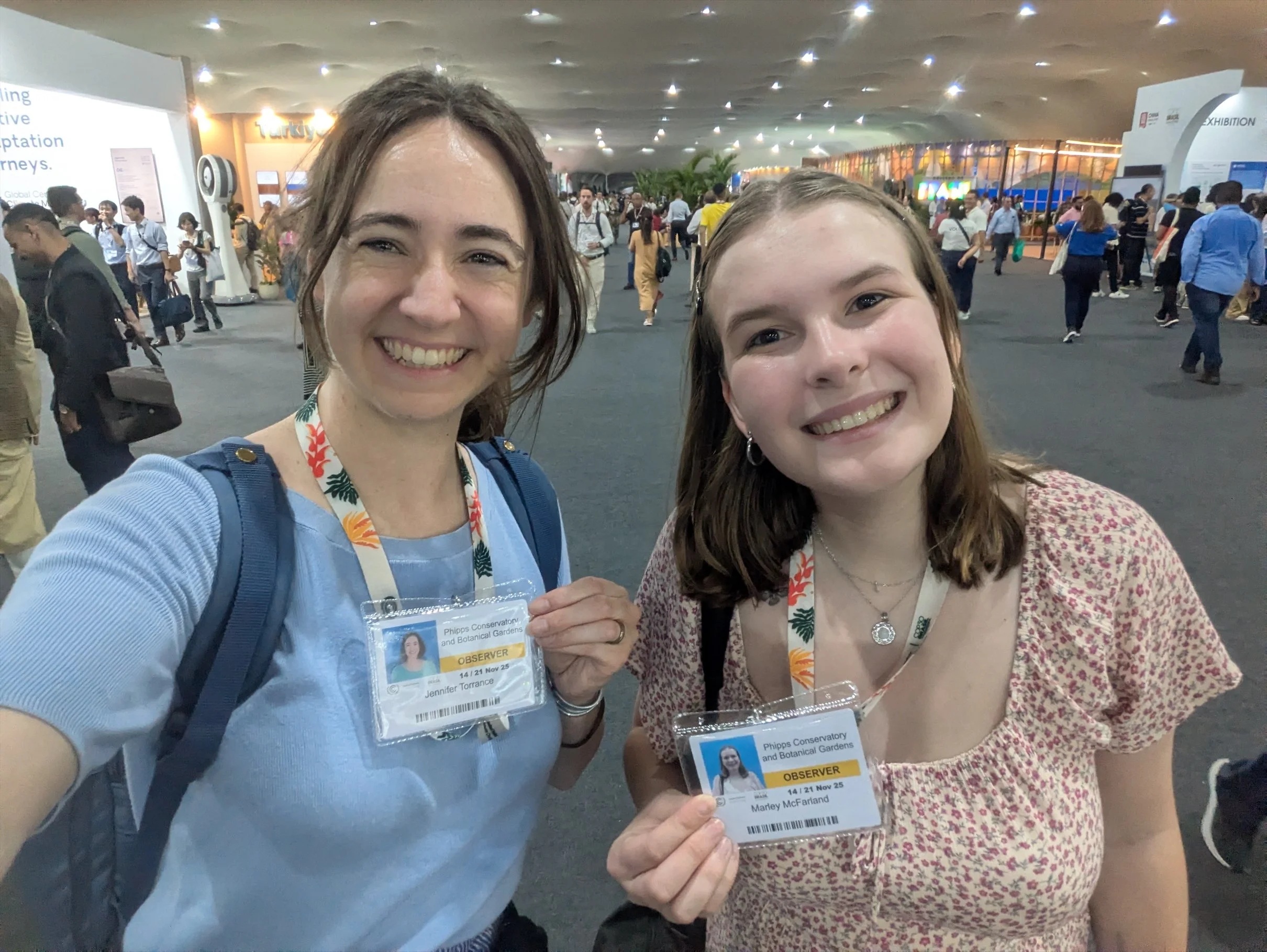
McFarland and her colleague Jennifer Torrance show off their badges for COP30. (Courtesy of Marley McFarland)
Now, she’s a college leader of the committee, a position that gave her the chance to go with Phipps Youth Climate Advocacy coordinator, Jennifer Torrance, to Belém for COP30 from Nov. 13-23.
As observers, McFarland and her cohort were able to see negotiations between member nations, explore an array of stalls in the conference’s pavilion, and interact with an international community of climate-conscious citizens.
“There was something called the People's Plenary, which was when civil society actually got the stage and indigenous people, people from minority groups, women, disabled people, and people of color—they all got the stage and were able to speak about the issues that have impacted them throughout the conference while the negotiators kind of sat back and listened,” McFarland recalled.
And while her constituency were labeled as observers of the COP30, McFarland was careful to note that they were not silent observers.
“We were in the same place as [the negotiators], and we did have the chance to kind of watch what they were doing and, if we felt the need, to go up to them and be like, ‘We think that you're holding back negotiations by doing this and that you should do this instead.’”
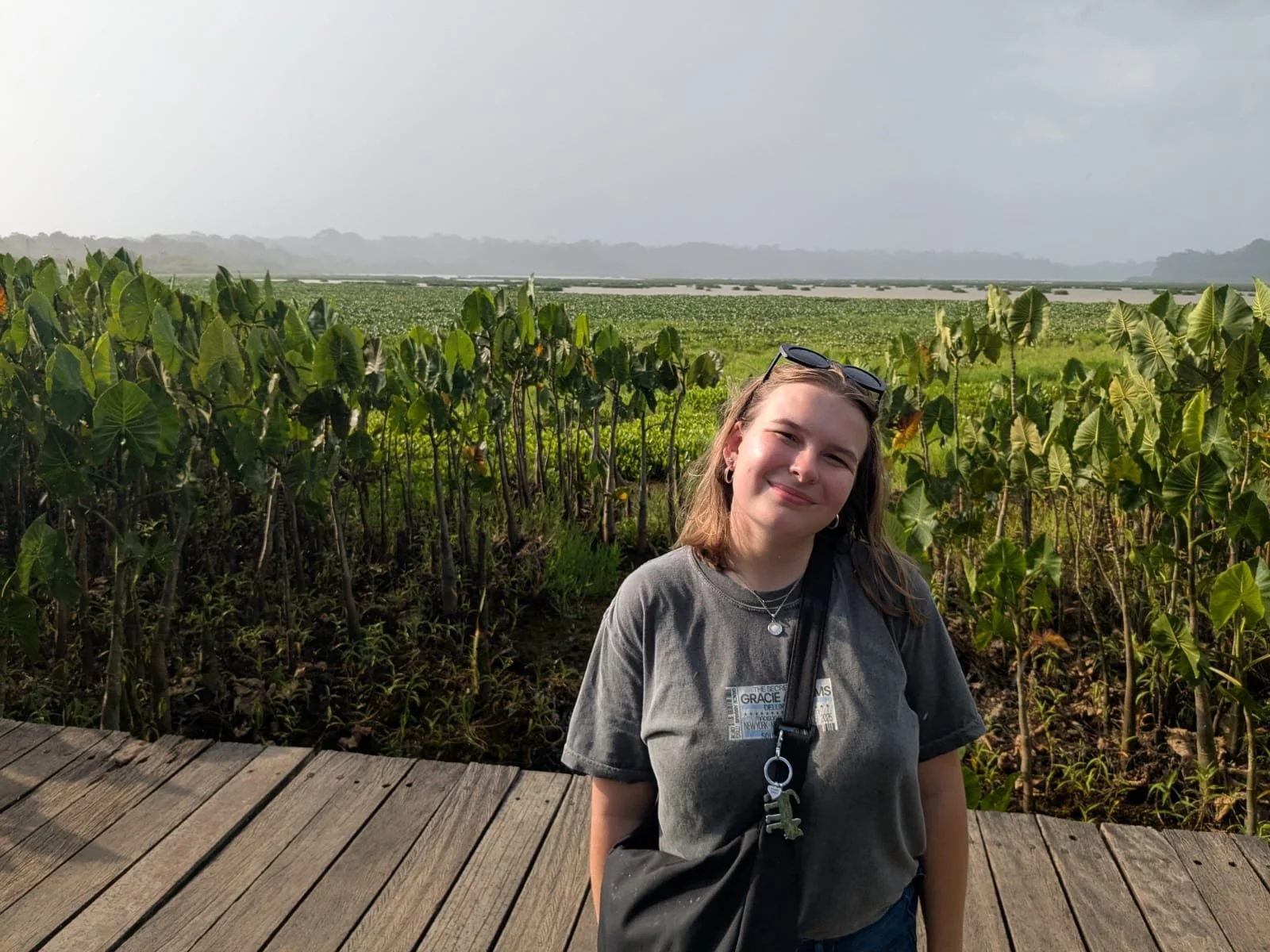
McFarland poses for a photo outdoors in Brazil. (Courtesy of Marley McFarland)
While exploring the area outside of the conference, McFarland was able to see açai harvested up close, hike in local parks, and visit Combu Island. That latter experience was particularly meaningful, she said.
“I met other college students from the United States, which definitely grounded me a little bit,” she said. “I also met people my age who were from places like Vietnam and Uganda and the U.K. It was a great experience to ground me in finding a community of people who are the same age as me, but also to be able to learn so much from other people's cultures.
“People actually do want to listen to youth,” McFarland said. “I think that everyone kind of has that openness to young people because everyone was once a young person and they know what it's like to kind of want your voice to be heard.
“Whether it be through the youth groups that we’re leading in climate change, or even just like through Chatham classes, be willing to listen to youth [and] think about how you can give college students, high school students, and younger children, a platform to reach more and more people.”
See what sustainability means at Chatham by learning about the Bachelor of Sustainability degree, exploring the Falk School of Sustainability & Environment, or reading about the University’s mission and values at chatham.edu.