
“Everything I Was Learning Felt Important:” Sandeep Rajan, MPAS ’26, on Chatham’s PA Program
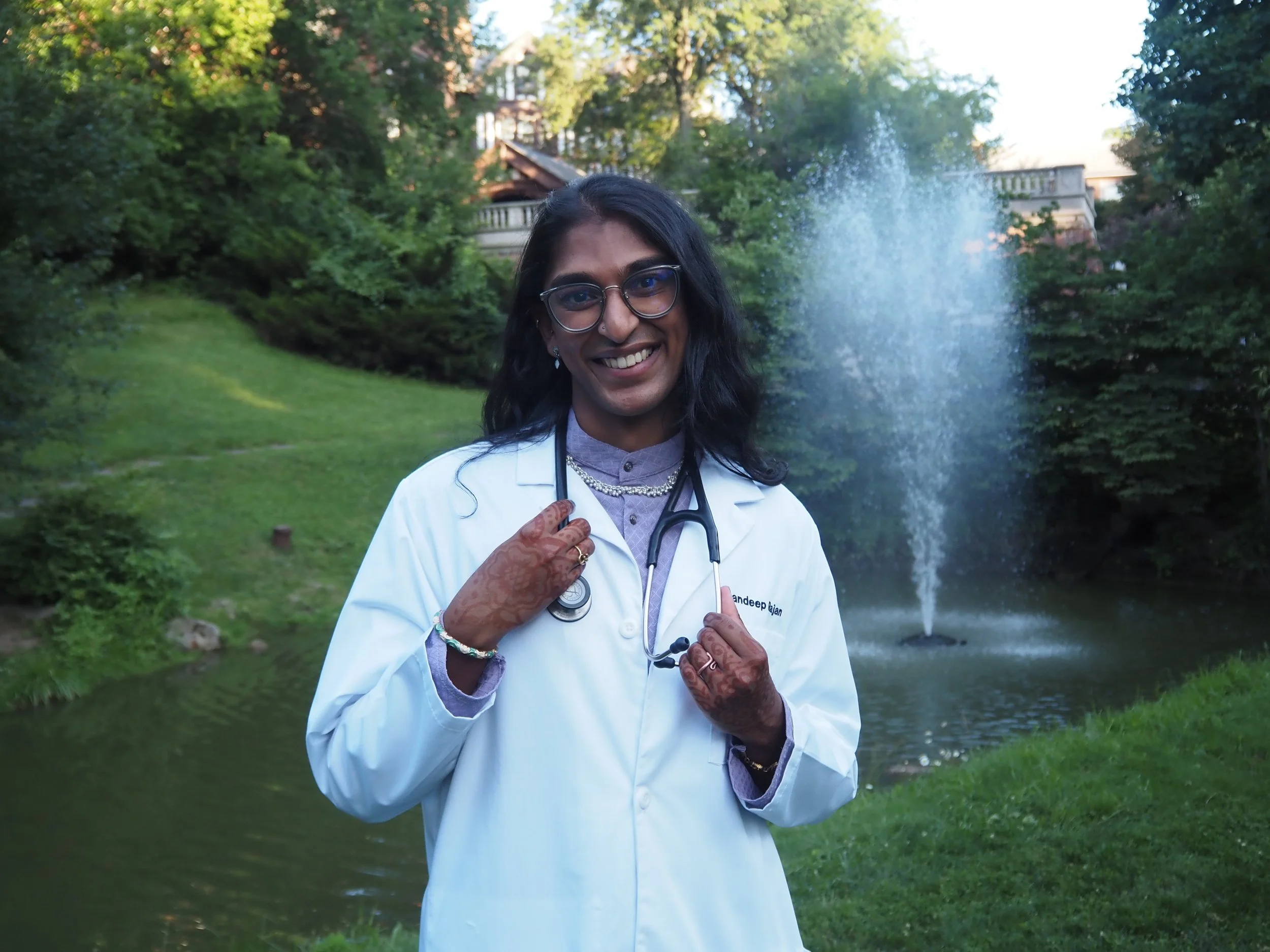
Sandeep Rajan poses for a photo at Chatham’s Shadyside Campus following the White Coat Ceremony. (Courtesy of Sandeep Rajan)
Sandeep Rajan, MPAS ’26, says when they began studying at Chatham University, “it felt like everything I was learning was important.”
When Rajan was looking for a PA program, Chatham’s Master of Physician Assistant Studies degree checked all the boxes.
The location in Pittsburgh and the experience of Problem-Based Learning were both appealing, and the University accepted credits Rajan acquired while taking high school AP classes.
Rajan came to Pittsburgh in 2018 to study neuroscience at the University of Pittsburgh. Originally from central New Jersey, they enjoyed exploring Pittsburgh’s museums, restaurants, parks, and other cultural institutions.
“I loved that we had the free bus passes,” Rajan says (Chatham students enjoy the same perk with their student IDs). “Growing up in New Jersey, I was in the suburbs where you need a car to go everywhere.
“Coming to [Pittsburgh] and being a young adult with the freedom to go wherever I wanted was awesome. I found myself exploring a lot and doing more things than I’d done before.”
By the time they were finishing their neuroscience program at Pitt, Rajan knew a physician assistant program was the next step. But before starting a PA program, they wanted to get work experience.
For three years, Rajan worked as a medical assistant, gaining experience in an ear, nose, and throat clinic before working in a pediatric doctor’s office. “That was awesome,” they say of the latter experience.
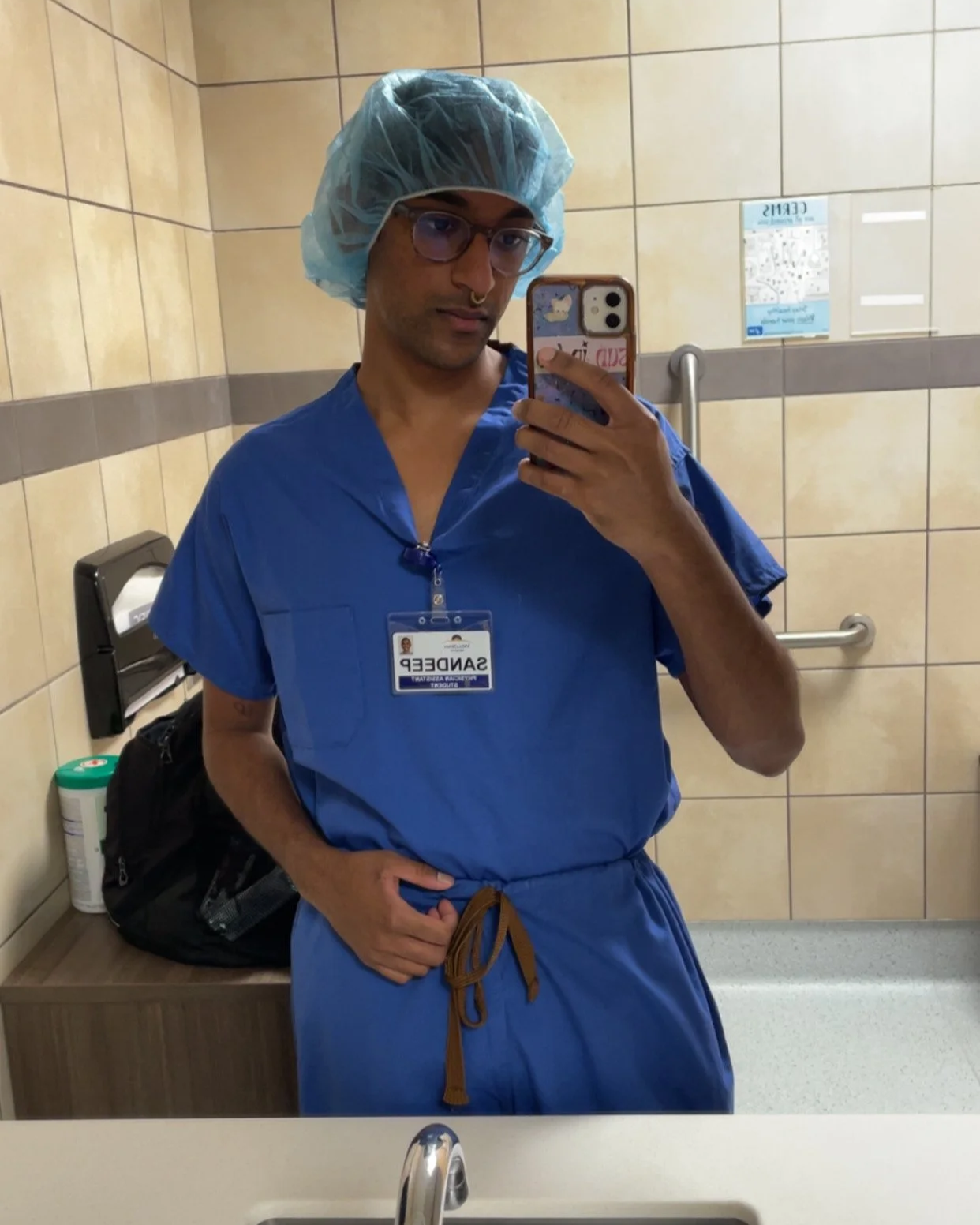
Rajan takes a selfie before going into the operating room at their plastic surgery rotation in Lancaster, PA.
At the pediatrician’s office, Rajan gave vaccinations, swabbed patients for COVID-19 and other viral tests, took blood samples, and more. “In pediatrics, I felt like I was actually doing something important.”
When it came time to begin a PA program, Chatham stood out to Rajan. In addition to being in Pittsburgh and taking those AP credits, a big component of their choosing Chatham’s MPAS program was Problem-Based Learning (PBL).
PBL is the cornerstone of the first year of the MPAS program. In PBL courses, small groups work together for weeks and try to "solve" simulated patient cases.
“It’s very interactive, it’s self-directed,” Rajan says. “A lot of PA programs are lecture-based, and you’re sitting through a lecture with 200-plus slides while [instructors] tell you everything.
“I always struggled with lectures in undergrad,” they say. “It wasn’t engaging to me to be stationary and quiet while learning. PBL offered the opposite of that.”
With PBL, you’re learning by talking with classmates, writing on the board, acting out scenarios with patients, and practicing giving presentations to a preceptor. “In PBL, you have to present,” they say.
Now finished with their final term at Chatham, Rajan says school here was difficult but enjoyable. “I didn't want to struggle, especially in school. When I would be like struggling in undergrad, I was like, ‘Oh, this is not a good experience.’”
But they found those thoughts changed at Chatham: “I was having to take in all this information and learn so much. I was kind of pushed to my limits, but I was like, ‘Wait, I'm also enjoying learning medicine.’”
In addition to work in the classroom, Rajan also had several clinical rotations. Two experiences in plastic surgery stood out to them.
One was with a cosmetic surgeon in Morgantown, WV. Rajan enjoyed that experience in part because patients, who were paying out of pocket, could have more agency in the process without the interference of insurance agencies.
But their favorite rotation was with a medical plastic surgeon in Lancaster, the small city in south-central Pennsylvania. There, Rajan worked with patients who were receiving breast reductions, skin cancer treatments, and other procedures.
“For plastic surgery, the work is external, so the patient sees the work that you're doing,” Rajan says. “You need to make sure the work is structurally good, making sure you have your sutures in the right spot and the tissues in the right place, but then you also need to make sure it's aesthetically in line with what the patient’s standards are, because our appearances, like, do matter.”
Working with patients receiving breast reduction was meaningful for Rajan, who says they want to work more with patients in the LGBTQ community. “It's my community,” they say. “I would love to work with queer patients and give back to a community that has uplifted me and helped me.”