
Busting the Myths of Networking with Career Development

Students meet with employers at the Spring 2025 Job & Internship Networking Mixer. (Kyle Ferreira)
The Spring 2026 Job & Internship Networking Mixer is approaching on Wednesday, March 25.
Ahead of the mixer, Pulse sat down with Josh Zeigler, assistant director of employer relations at Chatham’s Office of Career Development, to break down some of the common myths that stop students from making connections at these events and potentially getting their foot in the door at a job or internship.
"That company doesn't hire people in my major"
Companies aren’t necessarily going to hire college students and recent graduates just based on their majors, Zeigler says. Really, they’re looking for folks that have the practical experience and skills needed to succeed in the job. These can be skills gained in a classroom, by working on extracurricular projects, or through internships and other jobs.
Plus, many employers offer internships and jobs across multiple departments. A healthcare network may also hire workers for writing, data, and finance, in addition to healthcare professionals. Or, a retail company may offer jobs in design, sustainability, psychology, digital media, and more.
Look for jobs and employers that align with your skills and interests—not just your major.
"Networking is only useful if I'm actively job searching"
Sometimes “networking” can be a loaded term for students. Zeigler doesn’t see it that way.
“Our office uses networking as a learning tool,” he says. “Networking is the way you discover what’s available out there and how to navigate it. I can’t count the number of times I’ve learned of jobs and opportunities just through conversations.”
One part of networking is about job searching, Zeigler says, but another part involves keeping up to date with industries you’re interested in.
Some students show up to these mixers looking for jobs, some may be looking to meet a mentor, but many go just looking to practice talking with working professionals. What students get out of these events is up to them.
“This networking mixer is low-pressure and relationship focused,” Zeigler says. “It's a chance to practice skills, meet mentors, and learn how industries operate.”
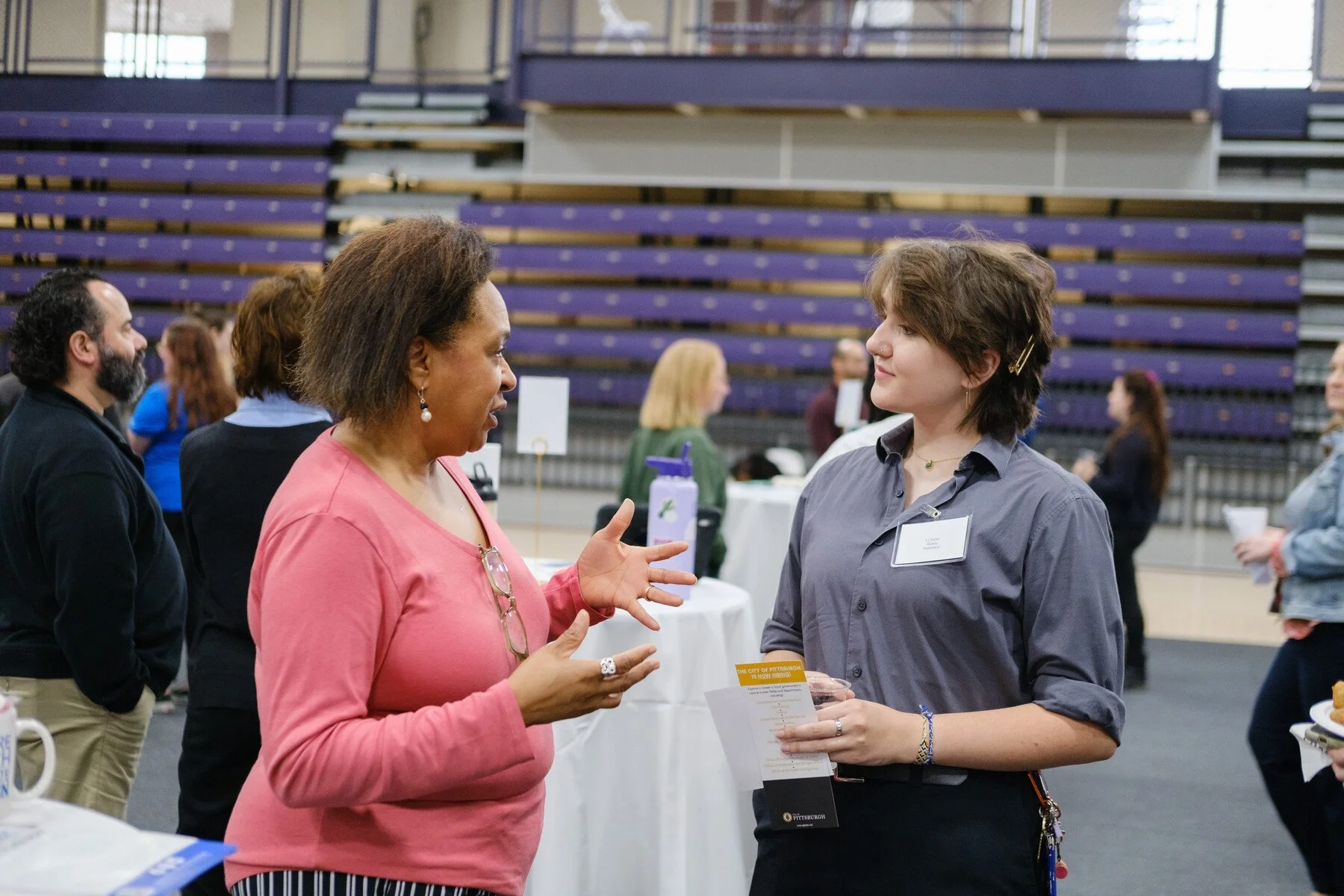
This year’s spring networking mixer is March 25, 2026. (Kyle Ferreira)
"I'm not prepared enough to talk to employers"
Again, Zeigler emphasizes that this mixer is just good practice—students don't need to be “ready” to take on a job, and employers expect them to still be learning.
“Students feel as though they aren’t prepared enough, they don’t know what to say, they don’t know what to ask,” Zeigler says. “That’s expected at an event like this.”
And, if students want extra help to prepare for networking events or interviews, they can reach out to the Office of Career Development to learn about career readiness and other resources.
What’s the best way to prepare for the upcoming mixer?
“Look through the list of companies that will be at the mixer and learn about three or four that you’d like to speak with, so you’re prepared to ask meaningful questions,” Ziegler says.
“You’re not going to get a very meaningful conversation if you go up to a table and say, ‘What do you do?’ But, if you already have an idea of what these companies do, you can ask, ‘I’m major in sustainability—what kind of opportunities do you have for me?’”
“I have nothing in common with these employers"
Ziegler emphasizes again that your major is just one part of who you are. Your interests, personality, and strengths are just as important when it comes to connecting with employers.
Employers like meeting students who are curious, ask questions, want to learn how their field works, and are strong in skills like communication and teamwork.
“When employers are meeting with students, they are interested in your major, but they’re also interested in who you are as a person,” Zeigler says. “More and more, that connection is as important as what you’re learning in class.”
Learn more about the people and resources at the Office of Career Development at careedevelopment.chatham.edu.