
Ten Years of be.wild.er farm With Founder Megan Gallagher ’11
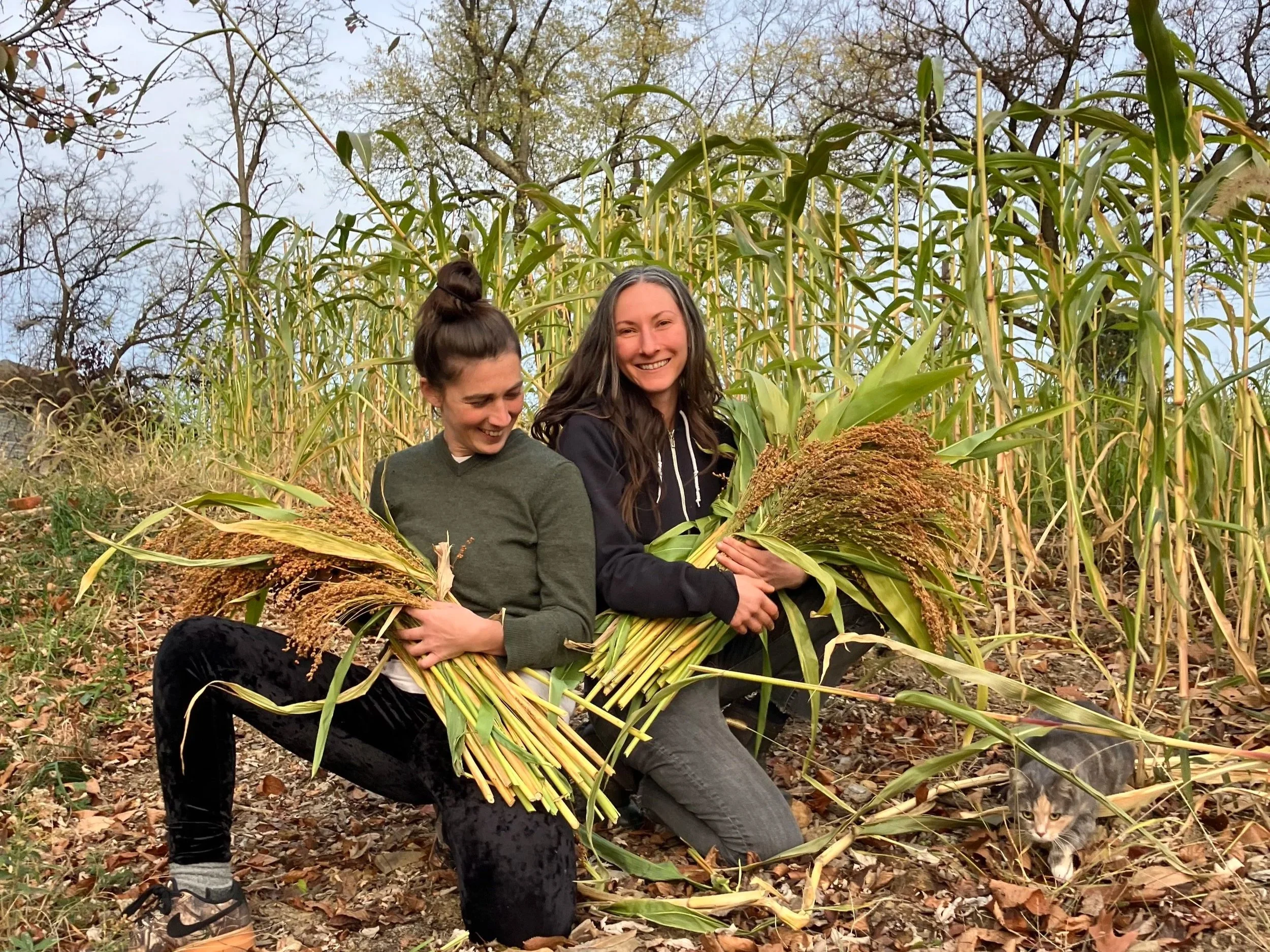
Megan Gallagher ’11, right, kneels in a field of broom corn with be.wild.er farm co-owner Adrienne Nelson. (Courtesy of Megan Gallagher)
When Megan Gallagher ’11 started be.wild.er farm in 2016, she tried the slow-and-steady approach.
She grew a diverse array of vegetables, flowers, fruits, and herbs, learning through trial and error what would grow and what would sell.
Slowly, steadily, the little farm in Harrison Township and Wilkinsburg has chugged along to its tenth anniversary this year.
Gallagher, who started at Chatham in 2007, majored in environmental science. “I grew up coming to Pittsburgh often, so I was familiar with and liked the city in general,” Gallagher says. “I visited Chatham’s campus and was enamored with the aesthetics of it. I’m a sucker for old buildings.”
The prospect of smaller class sizes and some positive meetings with Chatham’s athletics staff also made an impression on Gallagher ahead of her arrival at the University.
While she initially majored in visual arts and art history at Chatham, Gallagher also enrolled in a course on organic gardening, which took her on a new track. “That was my first time growing food and being part of a community of people growing food—I was hooked,” she told Pulse in 2018.
While in school, Gallagher stayed involved at Chatham’s Eden Hall Farm, going there once a week during the summers to tend to the crops and harvest. She also interned at Phipps Conservatory and Botanical Gardens, as well as the Pittsburgh Parks Conservancy.
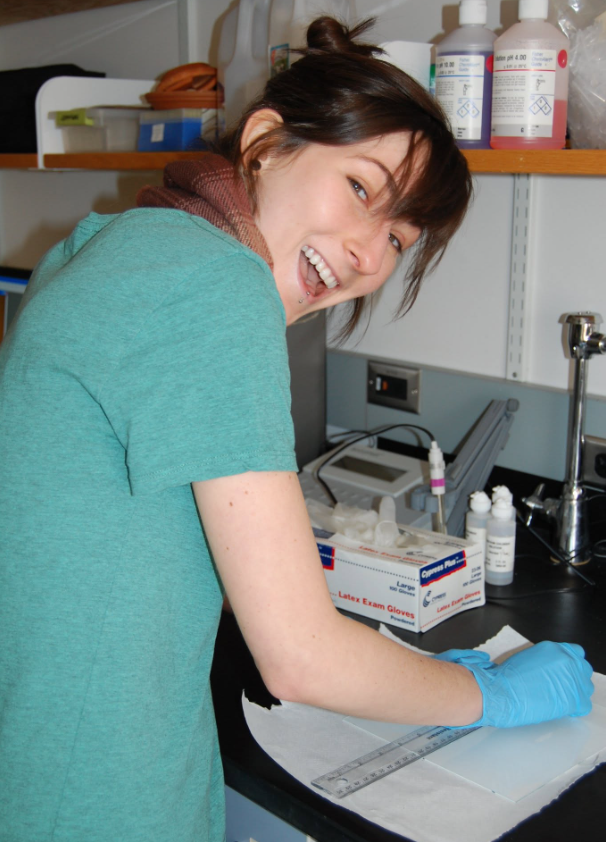
Gallagher works on a lab experiment for her capstone project in 2011. (Courtesy of Megan Gallagher)
“There were opportunities that were accessible and within the city that helped further develop my interest in environmental science and plants and food growing,” she says of those experiences.
After graduating, Gallagher began to volunteer at Knot Weed Farm in the Stanton Heights neighborhood. Later, she got a job at Butter Hill Farm, owned by Nick Lubecki, who ended up being instrumental to the beginning of be.wild.er.
As Lubecki was sunsetting his farm, Gallagher was figuring out what she should do next. Lubecki offered her access to some of his supplies and equipment, and he introduced her to landowners who would allow her to rent property and begin growing her own crops.
“It felt too good to pass up,” she says. “Why not? It was low stakes. I had a lot of things that I was borrowing to try out for a year. He really set the stage for me to start my own operation.”
Thus be.wild.er began, and Gallagher soon began selling her crops and learning to keep track of what sold well via farmers markets versus wholesale. Setting up at local farmers markets ended up providing a big boost.
“[Farmers markets] were very instrumental for the success of the business,” she says. “I was lucky to get into the Bloomfield market my first year. Pretty soon after I started vending there, it became kind of a destination for a lot of people in the area.”
A decade into the business now, Gallagher said she and the be.wild.er team are reevaluating their role at the farmers markets as their farm begins operating as a cooperative.
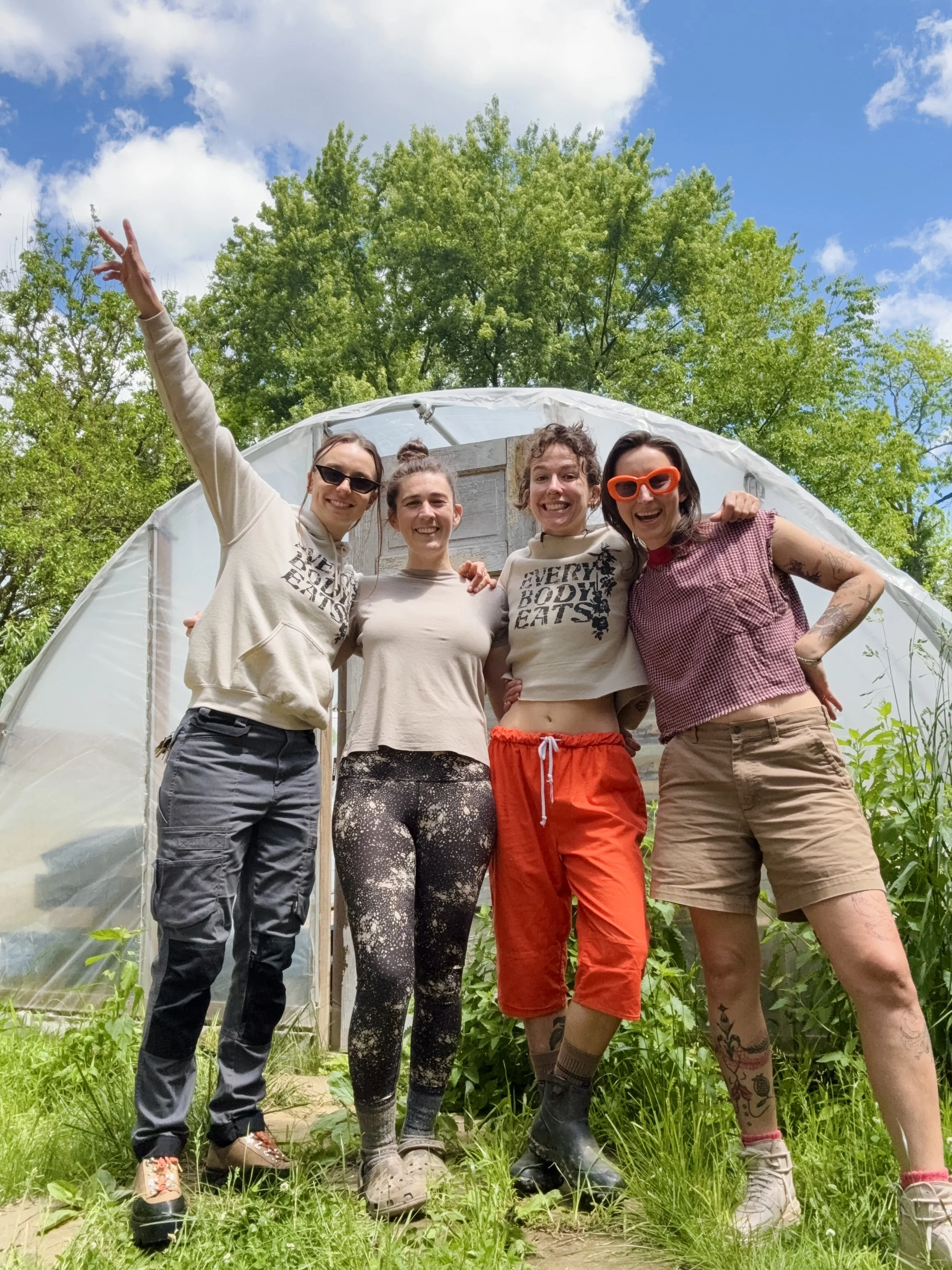
From left: be.wild.er co-owners Crescent Pilewski, Adrienne Nelson, Christine Lundin, and Sarah Sindler ’11. (Courtesy of Megan Gallagher)
“Doing a weekly farmers market felt like an overextension of what we could do,” she says. “We now pop up essentially once a month.”
At the same time, be.wild.er has now pivoted to an online farm store with weekly delivery to neighborhood locations. The store also lists products from the farm’s partners, building connections among farmers, producers, and customers who want to support these local farms.
“I believe this type of community building via food aggregation and distribution is key to creating robust food systems that support small scale and beginning growers,” Gallagher says.
The farm also continues to work with its restaurant partners, which over the years have included Butterjoint, Casbah, Fet Fisk, and more.
The big, new changes are partly because Gallagher started working at Grow Pittsburgh in 2025, a transition which allowed other people at be.wild.er to step into management roles. That means Gallagher is no longer the sole owner of be.wild.er, and she’s not working as the primary manager either.
At Grow Pittsburgh, she works as the Braddock Farm manager. “It’s a one-acre farm with a steel mill in the background. As one of Grow Pittsburgh’s production sites, our goal at Braddock Farm is to grow nourishing food for the communities we serve and to offer on-farm education through programming and workshops,” she says.
There, she oversees daily management of the farm and planning, as well as doing work with Grow Pittsburgh’s different community programs. “We have various folks who help out at that farm,” Gallagher says. “We have a workshare program, a pre-apprenticeship program, a youth learn-and-earn program, and handful of seasonal staff.
“In addition to making sure we’re growing food, it’s a lot of managing people and making sure their experience is educational and has a positive impact on the community,” she says. “I really like it. It’s my first time working for a nonprofit, which is an adjustment coming out of for-profit farming as a business owner.”
While the role itself provides a new experience, farming in a community is what Gallagher says she’s always been drawn to, and that goes all the way back to her roots at Eden Hall. “Chatham was a community-tended garden. Even though it’s a school setting, it was many of us.”
Learn more about Eden Hall Farm and Chatham’s robust degree programs in environmental science, sustainability, and more at chatham.edu.